Everything has a subscription or a hidden fee.
Having fun costs money in most cases. If you want to watch television, there’s streaming or cable. To stay connected, there’s Wi-Fi, a phone bill and an internet bill. Even things we think of as free usually come with some kind of cost attached.
The outdoors is free, but depending on where you want to explore, you may need transportation, gas, a flight or gear. Even going for a local walk can mean investing in a comfortable pair of shoes, hydration and something to fuel you along the way.
Going out with friends comes with its own costs. Drinks, dinner, coffee, tickets, parking, rideshares and cover charges can add up quickly. The grander the experience—and often the more “post-worthy” it is—the higher the bill tends to be. There can be an unspoken surcharge attached to making a night feel memorable, aesthetic or worth sharing online. None of that means the experience isn’t worth having, but it does make me more aware of how easily socializing and spending can become intertwined.
The larger your circle of family and friends, the more celebrations come with it too. Birthdays, weddings, baby showers, graduations, Christmas gifts and other occasions can become their own category of spending. One gift may not seem like much, but over the course of a year those expenses can stack up quickly, especially when several events happen close together. Relationships are worth investing in, but even generosity has to fit somewhere in the budget.
There’s almost always something to buy.
Social media only adds to it. Our feeds thrive on fear of missing out and keeping up with the Joneses. Even if you don’t particularly care about either, it’s difficult to avoid the constant advertising. Everything seems to be telling you that you need another product, another upgrade or another experience. Something about your life could be easier, prettier, healthier or more exciting if you would just buy this one thing.
And I don’t knock businesses for selling.
I’m a writer. I sell books, although probably not as aggressively as I could. I understand that businesses need customers. Almost everything these days is competing for some combination of our time, attention and money.
The older I get, the more I understand why people say time is money. To me, one of the greatest forms of wealth is freedom over your own time. That doesn’t mean wealthy people don’t work. Many of them work incredibly hard. My personal idea of wealth has just become less about how many things someone can afford and more about how much control they have over what they do with their days.
That realization has also made me think differently about consumption.
I’m beginning to understand the value of less being more. I don’t need every outfit advertised by a brand I like. I’ve realized that food cooked at home is often not only cheaper, but healthier, easier for me to stay in shape with and, many times, tastier. Working out at home or outside can be just as productive for me as going to a gym. Convenience has value, but so does learning when I’m paying extra for something I could reasonably do myself.
Budgeting has also become less optional in my mind.
At the same time, I understand that budgeting alone doesn’t magically make someone financially secure. It can be difficult to save or feel like you’re getting ahead when so many people are living paycheck to paycheck. There’s only so much you can cut when necessities already take up most of what you earn.
I know that personally.
I lived at home with my parents until I was 30 and didn’t move out until I got married. Living at home gave me opportunities to save and avoid some of the expenses that come with being completely on your own, but even then, building financial security wasn’t always simple.
Saving a few hundred or even a few thousand dollars can take time. Then a car repair, medical bill, move or some other unexpected expense can make months of progress feel like it disappeared overnight.
That’s something I think about whenever people say someone should “just save more.”
Sometimes there are spending habits that need to change. Sometimes we genuinely make bad financial decisions. I know I have.
But sometimes the math is simply tight.
Financial literacy can help us make better decisions with what we have, but it doesn’t suddenly make housing, transportation, groceries, healthcare or everyday life inexpensive.
Another part of financial literacy I’ve only recently started exploring is investing and passive income.
For a long time, money felt mostly like something you earned, spent and hopefully managed to save. Learning about investing has started to change the way I think about that. I’m beginning to understand the idea of making money work for you instead of relying entirely on the hours you personally put in.
I’m still early in that journey and have a lot to learn. Investing, compound growth and the different ways people create passive income can feel overwhelming when you first start trying to understand them. At the same time, I find the concept fascinating because it connects directly to my personal definition of wealth: having more freedom over your time.
I also don’t think passive income means doing nothing or discovering some magical way to get rich overnight. Most opportunities still require money, effort, patience, knowledge or some combination of all four. For me, it’s another area I want to understand better as I become more intentional about my financial future.
Unfortunately, I don’t think life is going to suddenly become cheaper or easier to navigate financially. That makes these lessons especially important as I think about larger purchases and long-term decisions—whether I’m searching for a car, thinking about what I want my housing situation to look like or deciding what is actually worth spending my money on.
Financial considerations have even shaped some of my biggest life decisions.
There are milestones I’ve delayed or spent more time thinking through because I understand that they come with long-term financial consequences. One of those decisions is whether I want biological children of my own. There are personal and emotional factors involved in that question, but I’d be lying if I said the financial cost of raising a child doesn’t factor into how seriously I think about it.
The more financially aware I become, the harder it is for me to separate major life choices from the practical realities attached to them. A car, a home, children, travel or even where you choose to live can affect your finances for years.
I don’t necessarily see that awareness as pessimistic. For me, it’s part of learning to make decisions with my eyes open.
Financial literacy has also required me to look backward.
I’ve made financial mistakes. Instead of constantly beating myself up over them, I’m trying to learn from them and use them as data. A mistake can tell me what I underestimated, what I didn’t understand at the time and what I should do differently the next time I’m faced with a similar decision.
Failure, in that sense, can become a collection of lessons and future best practices.
I’m still building my financial literacy. I don’t consider myself an expert, and maybe that’s part of why I’ve become so interested in it. The more I understand, the more I notice how money influences everyday decisions that I previously barely thought about.
It changes the way I see myself as a consumer.
In some ways, I’ve become more critical. I question whether I actually need something, whether convenience is worth its price and whether something is improving my life or simply being marketed to me as if it will.
In other ways, I’ve become less cynical.
I understand why people buy things they don’t necessarily need. We live in a world constantly designed to convince us that something is missing. I’ve fallen for it too.
I also understand that spending isn’t always about mindless consumerism. Sometimes it comes from wanting experiences, maintaining relationships, celebrating people we love, taking care of ourselves or trying to build the kind of life we imagined for ourselves.
For me, financial literacy isn’t becoming someone who never spends money or never enjoys what money can buy. It’s learning to recognize the difference between what I value, what I can realistically afford and what I’m simply being encouraged to want.
It’s also starting to understand that money can do more than buy things. It can provide stability, create options and, if handled wisely over time, potentially give you more control over one of the few things you can never get back: your time.
More than anything, it’s learning to recognize when I’m making the decision—and when something else is making the decision for me.
Slowly, the campus came into view. A mixture of excitement and fear filled Adrian. His dream had finally come true—he would be attending Yale. Still, nervousness about how he would be received crept into his mind.
He didn’t have many possessions: a laptop, a mini fridge, and a few basic necessities.
He had devoted countless hours to studying, community service, and other painstaking sacrifices to get here. Entering this elite world was a dream come true, but in some ways, it also felt like a nightmare. The thought of contending with generations of old money seemed almost impossible.
His family consisted of him and his mother, who had spent most of his life struggling to make ends meet. Adrian viewed himself as a poor young man searching for a place in an aristocratic world.
It had always been his passion to study law. Although the legal system had failed to punish his father for what he had done and had unfairly targeted his best friend, Adrian refused to let either experience completely distort his perception of it. More than anything, he wanted to make a positive impact on the system himself.
His mother helped him carry his meager possessions to his dorm. As they climbed the staircase, Adrian had the uncomfortable feeling that everyone’s eyes were on him. His mother seemed oblivious to it—or, if she noticed, she managed to conceal it.
As they rounded the corner and headed down the hall, Adrian prepared himself for his first encounter with his roommate.
Numerous possibilities ran through his mind. He only hoped the guy wasn’t overly eccentric or obnoxious.
Adrian had always struggled to connect with people his age. Most of them didn’t share his worldview, which made forming meaningful relationships difficult.
When they approached the room, the door was slightly ajar.
Inside, a nonchalant-looking guy sat at a small rectangular black desk, scrolling through Instagram on his MacBook Pro. The dorm wasn’t spacious, but it seemed manageable. Posters of indie rock bands covered the wall beside his bed.
The guy looked up and smiled.
“Hey, bro. I’m Mario Vitali. You must be Adrian Luz.”
He stood and extended his hand.
“Nice to meet you.” Adrian forced a tired smile, still dazed from the long drive.
“So, where are you from?” Mario asked.
“Phoenix.”
Adrian attempted another smile but abandoned it. He needed sleep.
“You must be his mother.” Mario turned toward Catalina and shook her hand. “I thought you were his sister for a second. No joke.”
Mario chuckled.
“Well, I’m flattered, and it’s very nice to meet you, Mario.” Catalina smiled.
“So, Mario, where are you from?” Adrian asked.
“I’m originally from Chicago, but after my parents separated four years ago, my mother sent me to Greenwich to live with my father. It’s not too far from here.”
“I bet that was quite a change,” Adrian said, a little more engaged.
“I still miss Chicago sometimes, but it’s not bad here either.”
“I’m already out of my element.” Adrian sighed.
“You’ll adjust. There’s plenty to do out here. Did you get a chance to tour New Haven yet?”
“I haven’t had much time. We just got here.”
A slight grin spread across Mario’s face.
“There’s still plenty of time.”
Catalina glanced between the two boys.
“Mario, if you don’t mind, I need to have a word with Adrian before I leave.”
“Sure thing. I was about to duck out anyway.” Mario headed toward the door. “It was nice meeting you, Mrs. Luz. Adrian, catch you later.”
He waved before closing the door behind him.
“Bye,” Catalina and Adrian replied in unison.
Catalina turned her attention to her son, nostalgia filling her eyes.
“I remember when you were a baby. I used to cradle you in my arms, and now you’re all grown up and leaving home. Where has the time gone?”
She cupped his face between her hands.
“Mom, stop.”
Adrian pulled away, and Catalina laughed. It never took much to embarrass him.
“It really is amazing how fast time goes.”
“I guess.” He rolled his eyes.
Her expression softened.
“Before I leave, I want you to know that if you ever need anything, you can call me. I’m going to miss you so much, and I wish you the best in all the years to come. And I expect you to come visit me whenever you can.”
“I will.”
“With all that said…” She reached into her beige tote bag. “I have something for you.”
Catalina pulled out a medium-sized rectangular box.
“I want you to open it after I leave.”
Adrian placed the box on his bed before embracing his mother. Catalina fought back tears.
“I’m going to miss you too. Don’t worry. I’ll stay in touch.”
He held her tighter.
“I won’t let you down,” he whispered.
He felt her tense in his arms.
“There isn’t a day that could go by where you could ever disappoint me.”
Catalina gripped his shoulders and looked at him.
Adrian lowered his gaze toward the floor and shook his head.
Deep down, he knew he already had.
“I love you,” he said.
“I love you too.”
They finally pulled apart.
“Goodbye, Adrian.”
“Bye, Mom.”
Catalina stepped into the hallway and closed the door behind her.
An emptiness settled over him almost immediately.
For years, he had talked about escaping Arizona and moving to the Northeast so often that his best friend used to tease him about it.
Now that he was finally here, the room suddenly seemed much quieter than he had imagined.
His attention shifted toward the black box sitting on his bed.
Before Mario returned, he decided he might as well open it.
The box wasn’t particularly light or heavy, which only made him more curious. He shook it once, trying to guess what was inside.
After digging through a mass of tissue paper, his hand finally reached the object beneath it.
He should have known.
A King James Bible.
Oh, great. Another one of Mom’s attempts to convert me.
Still, because he loved her, he wouldn’t throw it away.
As he started to close the box, he noticed a piece of paper sticking out from underneath the Bible.
He lifted it and unfolded the note.
Dear Adrian,
My one and only son, I love you so very much. I am deeply sorry for the lack of childhood you experienced because you were forced to grow up so fast.
I feel like I never truly told you how proud of you I have always been. You overcame obstacles no one should ever have to face. I pray with every passing day that you excel in everything you do.
Love,
Mom
Adrian stared at the note for a moment before noticing something underneath it.
Money.
Instant guilt washed over him.
She shouldn’t have given him anything extra. He already had a full scholarship, and he knew she needed the money more than he did.
The door suddenly swung open.
Adrian flinched.
“Hey, Adrian, what’s up?”
Mario entered carrying two large paper bags of Chinese takeout.
“I figured you’d be hungry after the drive, so I grabbed dinner for both of us.”
“Thanks.”
Adrian tried to sound more grateful than he felt capable of sounding.
Mario dropped onto his side of the room and immediately opened one of the containers.
“So, what are you majoring in?” he asked between bites.
Adrian hesitated.
“Law.”
“Oh, great. I’ll be sharing a room with a future attorney.”
Mario chuckled.
When Adrian didn’t laugh, Mario stopped.
“I’m joking. It’s a good field. My family has been in law for generations, actually. I decided to break the cycle and major in marketing. My father wasn’t happy about it at first, but eventually he agreed to support me.”
Oh, great. Another one of the good old boys.
Adrian glanced around Mario’s side of the room.
He couldn’t help wondering how someone so casual could come from generations of wealth and professional prestige.
“Do you have friends who go here?” Adrian asked, hoping he didn’t sound as anxious as he felt.
“Most of my friends are in a fraternity. My father banned me from joining this year because of my behavior at boarding school, but that won’t stop me from going to their parties.”
Mario ran his fingers through his light brown hair.
“That reminds me. You’ve got to come to some of them.”
Adrian raised an eyebrow.
“One of the houses is throwing a party tomorrow night. We should go. You can start acquainting yourself with some of your…”
Mario paused and gestured knowingly.
“…peers.”
Adrian understood immediately that the peers Mario had in mind were girls.
Mario nudged him.
For the first time since arriving at Yale, Adrian genuinely laughed.
My sister once asked me if it was a curse to get everything you want.
At first, it seemed like an odd question. Why would getting what you want ever be a bad thing?
Looking back, I understand what she meant.
As someone who has eventually gotten many of the things I’ve wanted, I can say there is something bittersweet about it. I can also look back at certain things I desperately wanted years ago and realize that had I received them when I asked for them, they probably would have been a disaster.
Sometimes not getting what we want when we want it saves us from ourselves.
We all know people who seem to have life figured out. From the outside, it can be difficult to find a flaw. Things seem to fall into place for them. They get the relationship, the career, the opportunity, the lifestyle. Meanwhile, someone else can seemingly do everything right and still experience one setback after another.
Most of us probably fall somewhere between those two extremes.
We have victories. We have failures. We have things that worked out exactly as we hoped and other things we would rather erase from the record entirely.
But maybe that is part of what humbles us.
Part of getting what you want is first knowing what you want and then being willing to do what it takes to pursue it.
If you want to become a doctor, for example, you take the prerequisite classes. You study. You spend time around other students pursuing the same path. You learn what medical schools expect of you.
Knowing the path, however, doesn’t guarantee you’ll walk it perfectly.
I know that from experience.
I was once a pre-med major, and I can tell you that sometimes it is much easier to drop the class than risk failing it.
Failure forces you to confront yourself.
If you stick it out and fail, eventually you have to move beyond feeling sorry for yourself and ask uncomfortable questions. What went wrong? What could I have done differently? Do I still want this badly enough to try again?
Maybe you retake the class the following semester. Maybe you give yourself some time and come back better prepared. Maybe you realize that this particular path was never right for you at all.
Your original grade is still on the transcript.
You can’t erase it.
But what comes afterward can change the story that transcript tells.
I think life works much the same way.
Our existence is like a transcript we cannot completely wipe clean. There will probably be choices we regret, opportunities we missed, relationships we mishandled and things we wish we had understood sooner.
We don’t get to go backward and remove them.
We only get to decide what we do next.
Sometimes walking away is the right decision. Changing your major doesn’t automatically mean you failed. Leaving a relationship, abandoning a plan or admitting that a dream no longer fits you can require its own kind of courage.
The harder question is figuring out the difference between changing direction because you have grown and changing direction because you are afraid to fail.
Comfort isn’t inherently bad.
There are things we become good at because we have spent years mastering them. There are relationships, careers and routines worth maintaining precisely because they work.
But comfort can also become a hiding place.
Sometimes what looks like perfection from the outside is simply someone becoming very good at staying within the boundaries of what they already know they can do.
There is nothing wrong with mastery. But if we never allow ourselves to be beginners again, never risk embarrassment and never put ourselves in situations where failure is possible, we can stop growing without realizing it.
Even plants experience periods of too much rain and periods without enough.
Growth has never required perfect conditions.
The opposite can happen too.
After enough disappointment, a person can become afraid to want anything at all.
It can feel safer to accept whatever comes rather than risk wanting something deeply and losing it. Even when something good finally appears, fear can creep in: How long until this goes wrong?
Sometimes we protect ourselves so well from disappointment that we also protect ourselves from possibility.
That is why I admire people who continue going after what matters to them even after failing.
Not recklessly. Not because every dream must be pursued forever.
But because failure did not remove their ability to hope.
Success isn’t something that happens once and stays with you permanently, either. Many of the things we value require maintenance.
Careers do.
Dreams do.
Relationships certainly do.
Love isn’t proven by never having a difficult moment. Sometimes love is choosing to remain engaged when something becomes uncomfortable, while still knowing when something truly needs to be released.
So is always getting what you want a curse?
Maybe only if getting everything you want prevents you from ever having to learn who you are when you don’t.
Failure requires vulnerability.
You have to care enough about something to risk being disappointed by it. You have to admit that you wanted it. You have to allow yourself to be seen trying.
There is courage in that.
One of the hardest questions we eventually have to ask ourselves is whether we were brave enough to actually participate in our own lives.
Were we creative?
Did we learn who we were?
Did we figure out what mattered to us instead of allowing other people to decide?
Did we chase some of our dreams?
Did we take care of the relationships that mattered?
Did we learn how to love?
And were we willing to fail at some of it?
Fifty years from now, if I am still here, I don’t want to look back only at a list of things I accomplished.
I want to know that I never became so comfortable with success that I stopped growing or so afraid of failure that I stopped trying.
Whether or not I get everything I want between now and then, I hope I never lose the passion, curiosity and vulnerability required to remain a work in progress.
I used to think fan fiction was reserved only for fans of a certain work. But as an author, I’ve found that even with my own stories, when I hit writer’s block or lose motivation, it can be fun to explore alternate timelines and what-ifs.
New characters and even ideas for full-length novels have sprung from writing fan fiction of my own work and exploring alternate realities.
It gives me the freedom to test ideas, relationships, and scenarios I might never publish or let see the light of day. There’s no pressure for everything to fit perfectly into canon.
Ironically, some of those experiments have helped me strengthen scenes that do make it into canon.
Sometimes stepping outside the story is what helps me find my way back into it.
If you only knew what I see when I look at you.
Not just a face,
but lifetimes of memories.
Moments wiped clean from your mind.
Each time you get close enough to remember
what we were
and who you are to me,
everything switches
before we ever get to end the cycle.
Our eternal sunshine.
Summer slows.
The days are still hot,
but shades of cool creep in.
Pumpkin spice finds its way
into coffee and desserts.
Three months remain
on the calendar year.
Harvest season arrives.
Pumpkin patches
and Halloween decorations
begin to take over.
By the end of the month,
it is early fall.
Leaves begin to change,
then loosen from the trees.
September is a transition—
summer lingering at the edges,
autumn slowly settling in.
A month full of change,
anticipation,
and nostalgia.
It feels like I’m going through a personal renaissance with art.
Once I started writing again, I found myself returning not only to fiction and screenwriting, but also to poetry and songwriting. I used to write songs out of boredom in high school and throughout my twenties, and now I’m exploring it again—and, even scarier, actually singing what I write.
I’m not the best singer. It isn’t necessarily my strongest natural talent, and I could probably benefit from a vocal coach. But I enjoy karaoke.
There’s something freeing about singing and dancing even when you’re not particularly good at either. Stage fright is real, but so is the joy of doing something simply because you enjoy it.
When I was younger, I used to come home after school and karaoke whenever no one else was around to hear me. Now I’ve started practicing again, hoping the neighbors don’t hear some of my rougher attempts.
It’s humbling, but that’s part of what makes it enjoyable.
Writing music has been interesting for another reason. Like screenwriting, novel writing, think pieces, or technical writing, songwriting has its own rules and rhythms. The words have to do something different.
One of the best ways I’ve found to test a song is simply to sing it.
It reminds me of reading a novel aloud while editing. Suddenly you hear where something drags, where the rhythm breaks, or where a line that looked perfectly fine on the page becomes awkward once spoken.
Songs work the same way.
When I was younger, most of what I wrote revolved around teenage angst, crushes, unrequited love, and all the emotions that came with them.
Now I’m challenging myself differently. Sometimes I’ll listen to a beat or instrumental and see what story it brings out of me. Other times I’ll pull from characters, situations, or ideas I’ve already written about and try to tell them through a song.
Then comes another challenge: singing it without trying to sound like someone else.
I’m learning to listen for my own natural voice while working on things like enunciation, vocal strength, rhythm, and confidence.
Right now, it’s mostly a creative exercise—something I do because I enjoy it and because it pushes me outside the kinds of writing I already know.
But who knows what might come from it someday?
I love coffee shops, whether they’re locally owned or corporate. I love chai, matcha, iced drinks, hot drinks, you name it. I’m not much for holidays, but I do follow the calendar according to what time of year it is for drinks.
Right now, it’s pumpkin spice season, which is probably my favorite coffee season other than winter, when peppermint and chestnut take over.
I love tea too, green, black, boba, as well as soda. I’m a fan of dirty sodas, and I enjoy an alcoholic drink here and there, although with my body composition and fitness goals, I try to limit how much alcohol I consume. Not to mention, it gets expensive. Gear already costs enough. Gym memberships and eating healthy do too, so I have to choose my battles.
That’s also part of why I’ve become interested in mocktails.
I have a habit, if you haven’t been able to tell, of picking up a hobby and going all in. Sometimes I eventually lose interest, and other times it becomes one of the many things permanently rotating through my repertoire.
The guitar is a good example. I’ve always wanted to get good at it, and I’ve gone through seasons of learning chords and practicing before slowly stopping. Now relearning feels like a combination of dedication and starting from scratch.
Other things have stuck with me more consistently, even after long breaks, writing, rock climbing, hiking.
Making drinks might be joining that rotation.
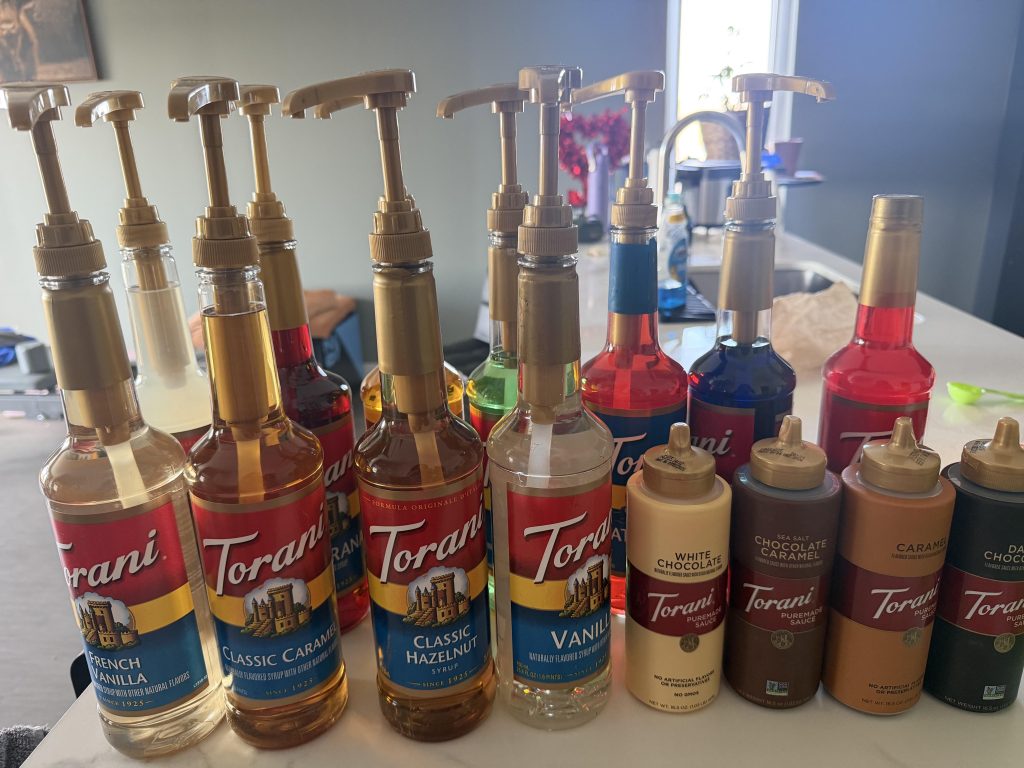
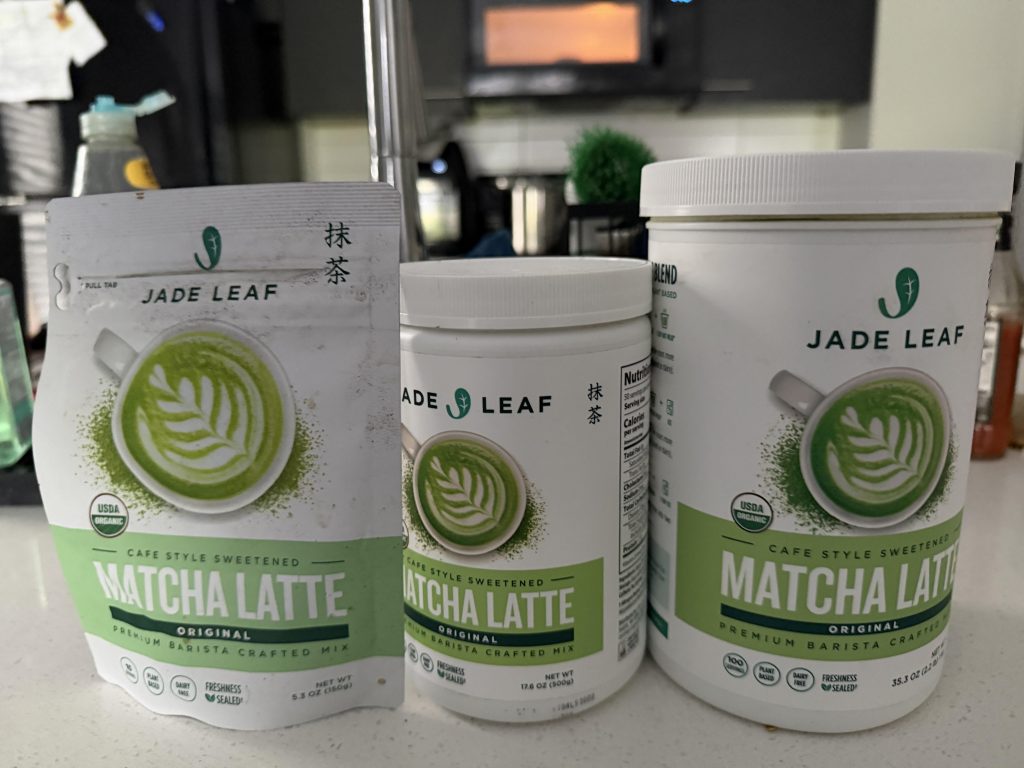
Part of the decision to start making more of my own drinks came from trying to be more fiscally responsible. I bought a collection of Torani syrups, chai powder, matcha powder and boba pearls. I have coffee and espresso at home, along with a coffee and espresso machine, and I usually stock some combination of soy, almond, oat or regular milk. I’ll occasionally keep mushroom coffee around too.
Depending on my mood, I might make something relatively healthy or something considerably more calorically dense.
Balance.
I’ve also been trying to cut back on energy drinks, especially Red Bull. On my last road trip out West, I stopped at a small coffee shop in Winnemucca and tried an orange Lotus energy drink. I liked it enough that I’ve since bought Lotus packets here and there to make at home.
The cane sugar version is already so sweet and flavorful that I usually don’t mix anything else into it, although you certainly can.
Keeping plenty of ice around has also become surprisingly important. You need it for iced drinks, cold foam and everything in between. I keep a handheld frother and a long cocktail spoon around too. They’re useful for coffee, but I also use them when mixing electrolytes into drinks or making smoothies with protein and vegetables.
For dirty sodas, I’ll keep soda on hand and experiment with flavored syrups and a little milk instead of half-and-half.
Then there’s my growing collection of club soda, tonic water, seltzer and sparkling water. Mix one with juice, fruit or syrup, and suddenly you have an easy homemade mocktail.
Of course, it’s fun to look up recipes for coffee-shop favorites and recreate them at home, but I think part of the appeal is simply learning how to make things yourself.
There’s something fun about becoming a part-time, unpaid barista for yourself and your husband. I’m fortunate he loves to cook and make drinks as well because I can rely on him to make me a smoothie, or caffeinated drink as well.
And apparently for everyone else too, because once I learn a trick, I start sharing it. I even put my mom onto using a handheld frother for her morning coffee.
Maybe that’s part of the hobby too.
Learning how to make something you love—and then showing someone else how to make theirs a little better.
Social media detoxes are popular these days. Sometimes, they’re needed.
We live in a world where comparison is constantly within reach. Everyone seems to be traveling the world, buying homes, running marathons, getting engaged, getting married, having children or launching a business.
Social media can become a mirror. In a way, it’s a crystal ball where you can see people you would have otherwise lost contact with and maintain parasocial relationships with people you’ve never actually known.
It can become an echo chamber of ideas, both positive and negative. It can magnify situations that are otherwise ordinary shortcomings while minimizing achievements that should have mattered.
It was early 2021 and I felt like I was stuck at rock bottom.
I was employed but not getting paid because I was on call, and I had just exited a relationship that died long before it officially ended. I was surrounded by all those milestones and highlight reels, but also quotes.
Most of the quotes on my explore page were sad quotes.
I would compare my situation to whatever the quote said and, like a sad girl, reposted it. Then I would look back at what I posted and feel embarrassed.
I was also in my quarter-life crisis, trying to figure out work, identity and what came next. It’s funny at nearly thirty-two because a lot of those things work themselves out with time.
I did the healthiest thing I knew to do at the time.
I disappeared.
I deactivated Facebook, Instagram. It was also around the time I took my blog offline, which was difficult because I had built a tiny platform there.
While I was off social media, I still had YouTube, but I started making an effort to watch more informative content. I read more. I avoided alcohol, not because I decided I would never drink again, but I had learned how easy it was for me to drink more than necessary in social situations and how much it could amplify negative emotions.
I also started practicing self-love but also accountability
That meant acknowledging my part in past situations instead of always seeing myself as someone things simply happened to. I wanted to understand the root of my pain rather than continuously reacting to symptoms.
It wasn’t easy.
I often felt the pull to go back online, check in and see what everyone was doing. But I needed time to slowly draw out the venom I had been infected with of comparison.
When I eventually returned, social media felt strangely addictive, almost like coming off a restrictive diet and finally getting your first cheat meal.
Except this time, I had more self-control.
Did I still overshare sometimes? Yes.
Did I still make cringe posts and repost thing I would later regret? Most definitely.
It took me years to rebuild my voice.
I experimented a lot as I reintegrated myself into posting. More importantly. I taught myself how to step away when it became necessary.
If something or someone was triggering something ugly inside me, I learned to pause and respond rather than immediately react. I started questioning why certain content affect me so strongly and reassessing my relationship with it.
Sometime that meant changing the channel.
Sometimes it meant changing the algorithm.
Sometimes it meant logging off.
Online boundaries are just as important as personal ones, and I had to learn both during the period when I went into what I now jokingly call monk mode.
Things would never be exactly the same as they were before I broke.
But that’s one of the strange things about healing.
The scars don’t disappear. They become almost like personal tattoos, a record of the paths you’ve traveled, the places that hurt you, and the person who eventually walked out to the other side.
Sometimes disappearing isn’t running away.
Sometimes you have to become quiet enough to hear your own voice again.
Going ghost.
VERTICAL
Chapter 1
The Summit
Breathing the crisp mountain air above fourteen thousand feet felt like it stripped my ribs bare, shocking life back into muscles dulled by hours of climbing. I had pushed up from camp through the early morning dark, fighting high winds and near-whiteout conditions, front-pointing steep snow with an ice axe in one hand and a hiking pole in the other. Now, standing on the summit of Mount Shasta, exhaustion gave way to something else entirely.
Mount Shasta felt unlike any peak I had ever climbed, her presence rising from the volcanic spine beneath my boots. The Cascades stretched endlessly below, ridgelines stacked and fading into the distance. I set down my axe and pole and sat cross-legged in the snow, letting the sun warm my skin, already exposed too long at altitude.
Then, on the far horizon, the light changed. A violent flash bloomed into a towering plume, rising fast, spreading outward, too symmetrical, too deliberate. Colors churned inside the cloud as it climbed.
Was I delirious?
It couldn’t be what it looked like. Scenes like that belonged to textbooks. Hiroshima. Nagasaki. Not here. Not on American soil.
How far away was it?
There was only dead silence, broken by the wind tearing across the summit. Then came a low, distant rumble that vibrated through the mountain and into my chest. It settled the question instantly. I could not stay here.
I needed to move, and fast.
If I descended toward civilization, who knew what I would find waiting below. The range, however, stretched on for hundreds of miles. I knew exactly how little food and fuel I carried. I didn’t know how long my body could endure the altitude, but staying high and traversing the mountain felt like the only option that made sense.
I could not stay on the summit.
Whatever had been hit was somewhere below. Roads meant towns. Towns meant people, and people might mean targets. For now, the mountains felt safer.
Mountaineering was still new to me. I had climbed several peaks, most far less technical than Shasta. Mount Hood had been my first guided climb. I had chosen Shasta because it was the anniversary of my brother’s death. This climb was supposed to be for him.
Turning my back to the exposure was the part of downclimbing I resented most. Every instinct screamed against it. But I needed to drop lower along the ridgeline, to breathe easier, to follow the spine of the mountain away from whatever was unfolding beyond the horizon.
One step at a time, always maintaining three points of contact. The axe stayed in my lead hand, while my free hand pressed into the slope for balance. I placed my boots deliberately, searching for firm rock, careful to avoid loose talus and thin patches of ice. On the steeper rolls of terrain, I turned in and downclimbed facing the mountain. When the angle eased and the footing improved, I turned back outward and continued lower, steadying myself with each step.
The wind turned brutal, surging with flurries that whipped at my shell and tore at my hair. Without my goggles and balaclava, my face would have been raw with windburn in minutes. The gusts howled across the ridge, carrying something feral in their sound, deepening the unease already coiled in my chest.
To think that in my lifetime, of all times, the world would come under siege while I stood on top of it. While I had chased summits and silence, everything beneath me was unraveling into chaos.
I had not planned to stay at altitude for days.
I turned up my radio, cycling through static until a voice finally broke through, thin and distorted.
“Please take cover. We are under attack.”