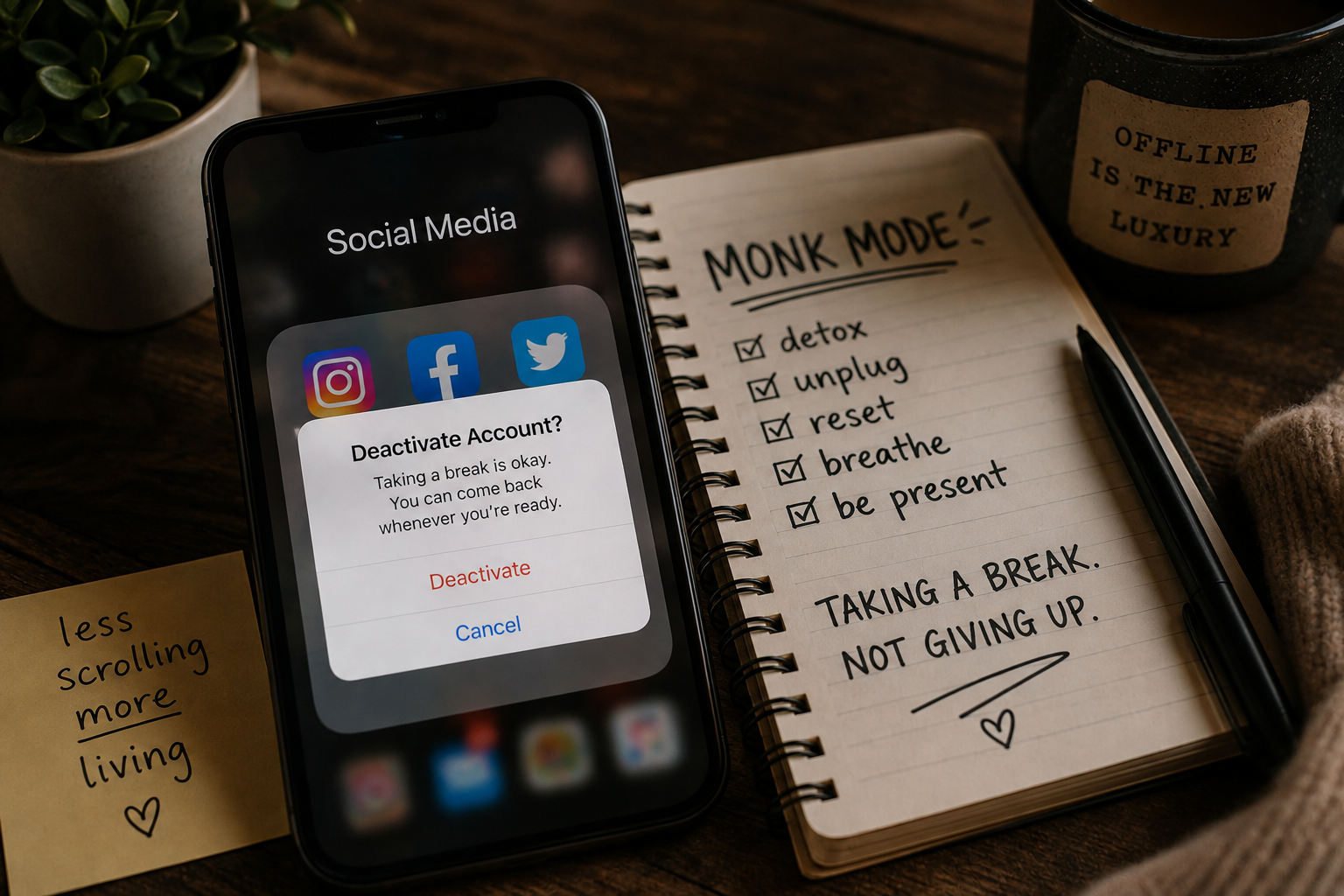
Social media detoxes are popular these days. Sometimes, they’re needed.
We live in a world where comparison is constantly within reach. Everyone seems to be traveling the world, buying homes, running marathons, getting engaged, getting married, having children or launching a business.
Social media can become a mirror. In a way, it’s a crystal ball where you can see people you would have otherwise lost contact with and maintain parasocial relationships with people you’ve never actually known.
It can become an echo chamber of ideas, both positive and negative. It can magnify situations that are otherwise ordinary shortcomings while minimizing achievements that should have mattered.
It was early 2021 and I felt like I was stuck at rock bottom.
I was employed but not getting paid because I was on call, and I had just exited a relationship that died long before it officially ended. I was surrounded by all those milestones and highlight reels, but also quotes.
Most of the quotes on my explore page were sad quotes.
I would compare my situation to whatever the quote said and, like a sad girl, reposted it. Then I would look back at what I posted and feel embarrassed.
I was also in my quarter-life crisis, trying to figure out work, identity and what came next. It’s funny at nearly thirty-two because a lot of those things work themselves out with time.
I did the healthiest thing I knew to do at the time.
I disappeared.
I deactivated Facebook, Instagram. It was also around the time I took my blog offline, which was difficult because I had built a tiny platform there.
While I was off social media, I still had YouTube, but I started making an effort to watch more informative content. I read more. I avoided alcohol, not because I decided I would never drink again, but I had learned how easy it was for me to drink more than necessary in social situations and how much it could amplify negative emotions.
I also started practicing self-love but also accountability
That meant acknowledging my part in past situations instead of always seeing myself as someone things simply happened to. I wanted to understand the root of my pain rather than continuously reacting to symptoms.
It wasn’t easy.
I often felt the pull to go back online, check in and see what everyone was doing. But I needed time to slowly draw out the venom I had been infected with of comparison.
When I eventually returned, social media felt strangely addictive, almost like coming off a restrictive diet and finally getting your first cheat meal.
Except this time, I had more self-control.
Did I still overshare sometimes? Yes.
Did I still make cringe posts and repost thing I would later regret? Most definitely.
It took me years to rebuild my voice.
I experimented a lot as I reintegrated myself into posting. More importantly. I taught myself how to step away when it became necessary.
If something or someone was triggering something ugly inside me, I learned to pause and respond rather than immediately react. I started questioning why certain content affect me so strongly and reassessing my relationship with it.
Sometime that meant changing the channel.
Sometimes it meant changing the algorithm.
Sometimes it meant logging off.
Online boundaries are just as important as personal ones, and I had to learn both during the period when I went into what I now jokingly call monk mode.
Things would never be exactly the same as they were before I broke.
But that’s one of the strange things about healing.
The scars don’t disappear. They become almost like personal tattoos, a record of the paths you’ve traveled, the places that hurt you, and the person who eventually walked out to the other side.
Sometimes disappearing isn’t running away.
Sometimes you have to become quiet enough to hear your own voice again.
Going ghost.