VERTICAL
Chapter 1
The Summit
Breathing the crisp mountain air above fourteen thousand feet felt like it stripped my ribs bare, shocking life back into muscles dulled by hours of climbing. I had pushed up from camp through the early morning dark, fighting high winds and near-whiteout conditions, front-pointing steep snow with an ice axe in one hand and a hiking pole in the other. Now, standing on the summit of Mount Shasta, exhaustion gave way to something else entirely.
Mount Shasta felt unlike any peak I had ever climbed, her presence rising from the volcanic spine beneath my boots. The Cascades stretched endlessly below, ridgelines stacked and fading into the distance. I set down my axe and pole and sat cross-legged in the snow, letting the sun warm my skin, already exposed too long at altitude.
Then, on the far horizon, the light changed. A violent flash bloomed into a towering plume, rising fast, spreading outward, too symmetrical, too deliberate. Colors churned inside the cloud as it climbed.
Was I delirious?
It couldn’t be what it looked like. Scenes like that belonged to textbooks. Hiroshima. Nagasaki. Not here. Not on American soil.
How far away was it?
There was only dead silence, broken by the wind tearing across the summit. Then came a low, distant rumble that vibrated through the mountain and into my chest. It settled the question instantly. I could not stay here.
I needed to move, and fast.
If I descended toward civilization, who knew what I would find waiting below. The range, however, stretched on for hundreds of miles. I knew exactly how little food and fuel I carried. I didn’t know how long my body could endure the altitude, but staying high and traversing the mountain felt like the only option that made sense.
I could not stay on the summit.
Whatever had been hit was somewhere below. Roads meant towns. Towns meant people, and people might mean targets. For now, the mountains felt safer.
Mountaineering was still new to me. I had climbed several peaks, most far less technical than Shasta. Mount Hood had been my first guided climb. I had chosen Shasta because it was the anniversary of my brother’s death. This climb was supposed to be for him.
Turning my back to the exposure was the part of downclimbing I resented most. Every instinct screamed against it. But I needed to drop lower along the ridgeline, to breathe easier, to follow the spine of the mountain away from whatever was unfolding beyond the horizon.
One step at a time, always maintaining three points of contact. The axe stayed in my lead hand, while my free hand pressed into the slope for balance. I placed my boots deliberately, searching for firm rock, careful to avoid loose talus and thin patches of ice. On the steeper rolls of terrain, I turned in and downclimbed facing the mountain. When the angle eased and the footing improved, I turned back outward and continued lower, steadying myself with each step.
The wind turned brutal, surging with flurries that whipped at my shell and tore at my hair. Without my goggles and balaclava, my face would have been raw with windburn in minutes. The gusts howled across the ridge, carrying something feral in their sound, deepening the unease already coiled in my chest.
To think that in my lifetime, of all times, the world would come under siege while I stood on top of it. While I had chased summits and silence, everything beneath me was unraveling into chaos.
I had not planned to stay at altitude for days.
I turned up my radio, cycling through static until a voice finally broke through, thin and distorted.
“Please take cover. We are under attack.”
Fitness for me used to be about the mirror, the size on the clothing tag, and the number on the scale. Those things can matter, but they don’t always determine health or physical fitness.
At different points in my adult life, I’ve weighed as much as 232 pounds and worn up to a size 18. I’ve also weighed as little as 127 pounds and, at different points, worn an XS or small and sizes 0 or 2. But my weight, measurements, and clothing size haven’t always mapped neatly onto each other. Sometimes I’ve weighed considerably more but worn a smaller size, or weighed less and worn a larger size, depending on my body composition. I’m around 5’5″, which is fairly average in height, although my shorter torso and proportionally longer legs can sometimes make me appear taller.
My body composition has changed along with my lifestyle and training habits. At similar weights, my body hasn’t necessarily looked or felt the same. Sometimes I’ve carried more muscle or more body fat, had smaller or larger measurements, or worn a different clothing size. Losing weight and later regaining some of it hasn’t meant returning to exactly the same body I had before.
From January 2023 through 2025, I went on a weight-loss journey while taking the GLP-1 medication Wegovy. I lost about 70 pounds and, at my lowest during that journey, almost 80. Since getting off the medication, I’ve regained about half of that weight—roughly 35 pounds—which has been tough. I’m slowly working on body recomposition again, losing fat while building muscle, which also means accepting that the number on the scale may fluctuate along the way.
However, during that time, I also built habits I didn’t have before. I became more mindful of my eating patterns, portions, and nutrition. More importantly, my relationship with fitness began to change.
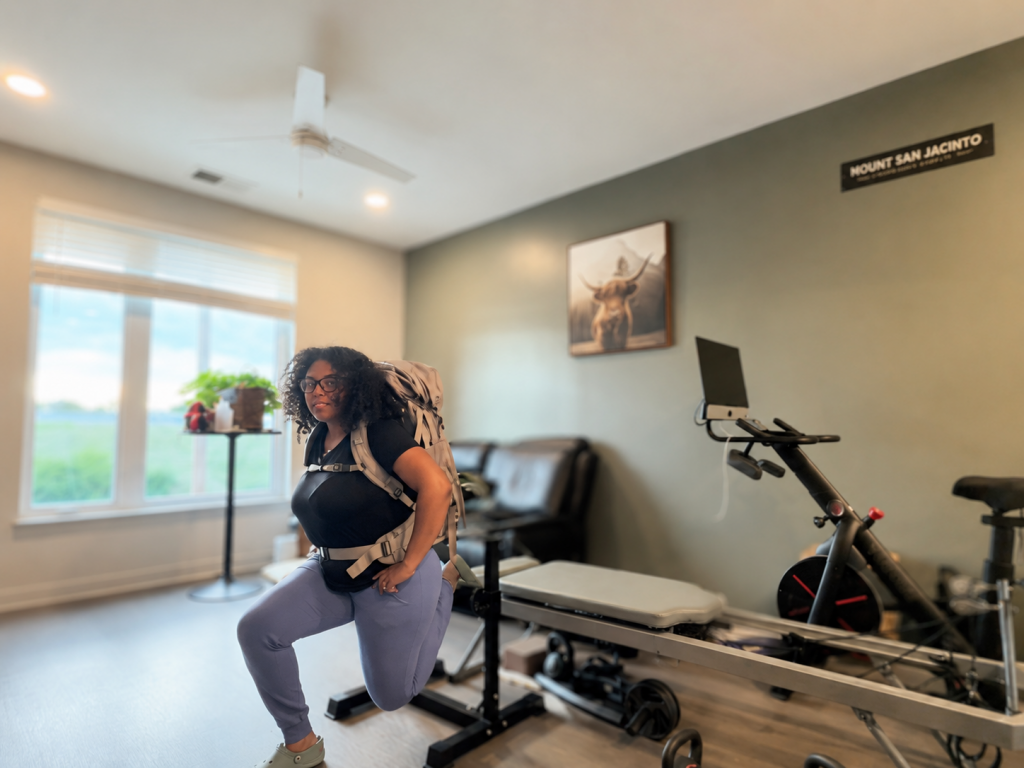
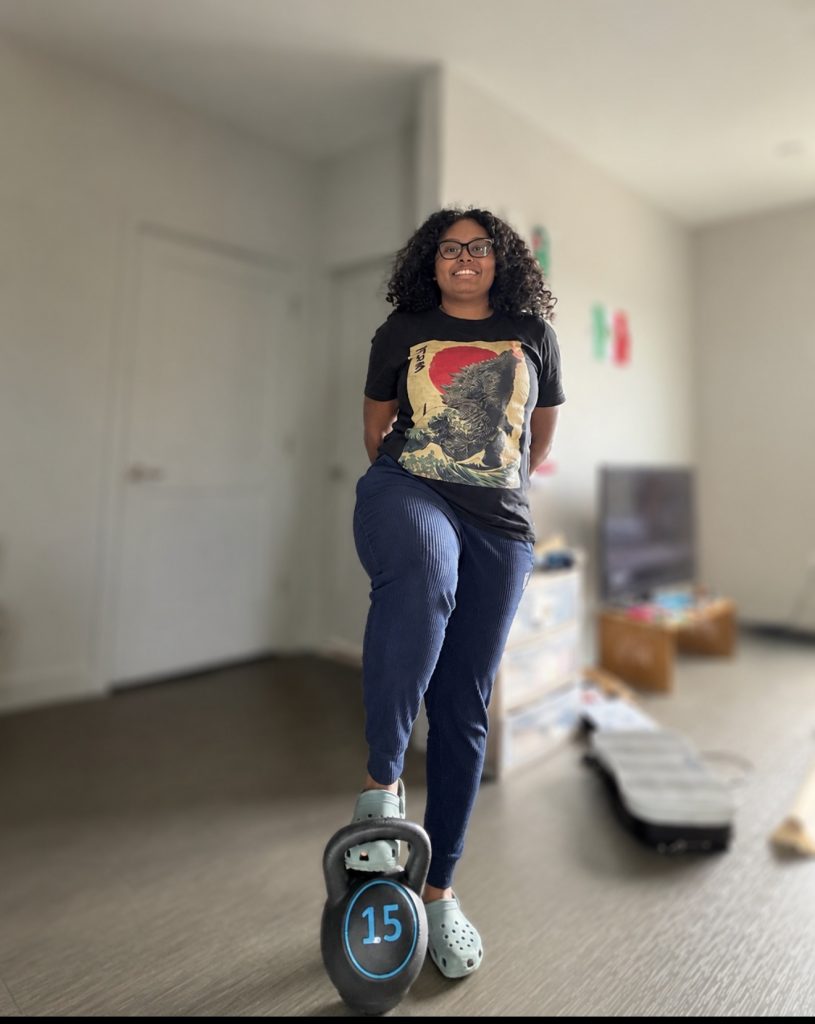
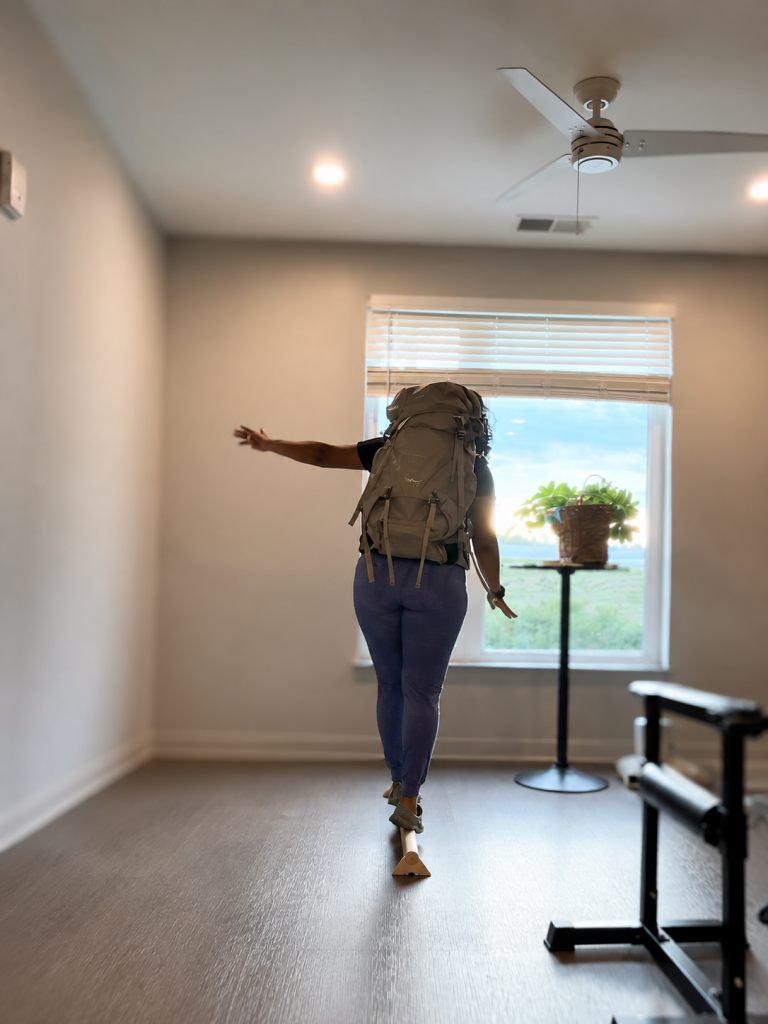
I got into hiking and mountaineering. Before that, much of my exercise centered around cardio and trying to slim down. I walked on an incline treadmill, used the StairMaster and elliptical, cycled indoors, practiced Pilates, and used weight machines. As my goals changed, I started adding more strength training, rock climbing, running, core work, and balance training.
Depending on the week, I may have a heavier training week followed by one focused more on recovery. I’ve learned that progressing doesn’t necessarily mean pushing as hard as possible every day. Sometimes my body needs more work, and sometimes it needs rest.
The mountains have been some of the biggest teachers in that process.
When I climbed Pikes Peak in July 2025, I weighed less than I did when I climbed Mount Rose in June 2026. Despite weighing more on Mount Rose, I found that climb more manageable.
The two mountains aren’t directly comparable. Mount Rose is shorter and at a lower altitude than Pikes Peak. But I had also changed the way I trained. By the time I climbed Mount Rose, I had spent more time running, strength training, and rock climbing. I felt stronger and more stable, and I noticed that the balance and body awareness I had developed through climbing helped when I slipped or moved across uneven terrain.
I’ve also started paying more attention to the smaller muscles that are easy to overlook. Training the stabilizing muscles around my ankles and strengthening my calves, along with working on mobility, can have real-world applications. Those smaller improvements matter when I’m moving across uneven terrain, traveling uphill or downhill, covering long distances, or trying to maintain control while fatigued.
Other mountains have shown me where I’m still weak.
I fell frequently during the descents on Mount Humphreys and San Jacinto’s Cactus-to-Clouds route. I didn’t have the same problem on Pikes Peak, but my route there was primarily uphill. Those experiences taught me that getting up a mountain and getting back down can require different strengths.
Descending requires balance and leg strength to control your body as gravity pulls you downhill. You can have the cardiovascular endurance to keep moving for hours and still discover weaknesses in your stability, muscular endurance, or ability to control your movement.
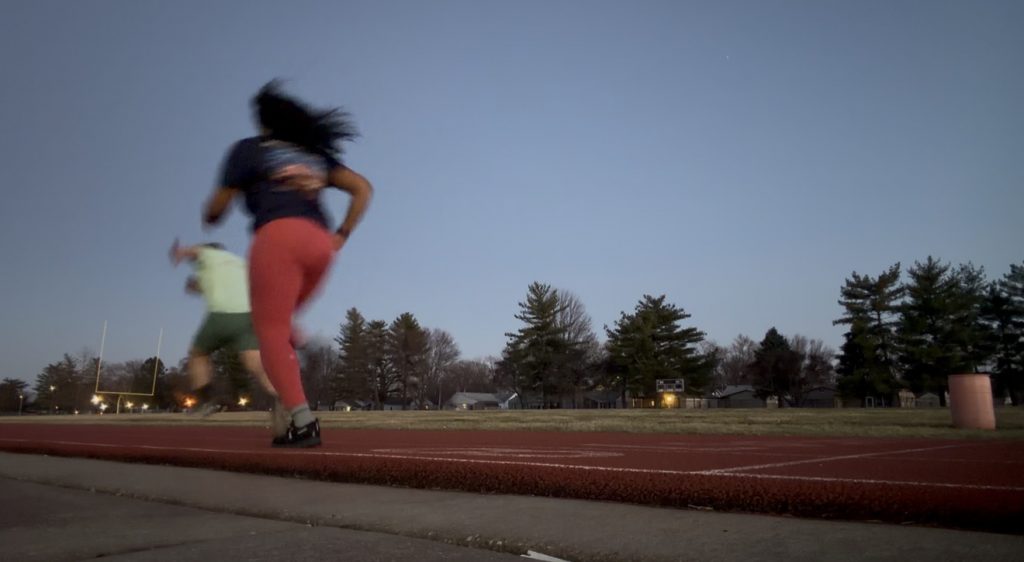
Running has exposed weaknesses too. After completing a 5K, 10K, and half marathon, I’ve learned that my calves tend to be one of my weakest links. I noticed the same thing on the uphill portion of Cactus-to-Clouds. My calves became extremely fatigued during the sustained climbing, which at times felt like being on a StairMaster that never ended.
All of this has changed the way I think about endurance.
Cardio still matters. If I want to hike long distances, run, climb at elevation, or spend an entire day moving through the mountains, I need cardiovascular endurance. But I’ve learned that endurance alone isn’t enough.
Strength matters too. So do balance, core stability, flexibility, mobility, and muscular endurance.
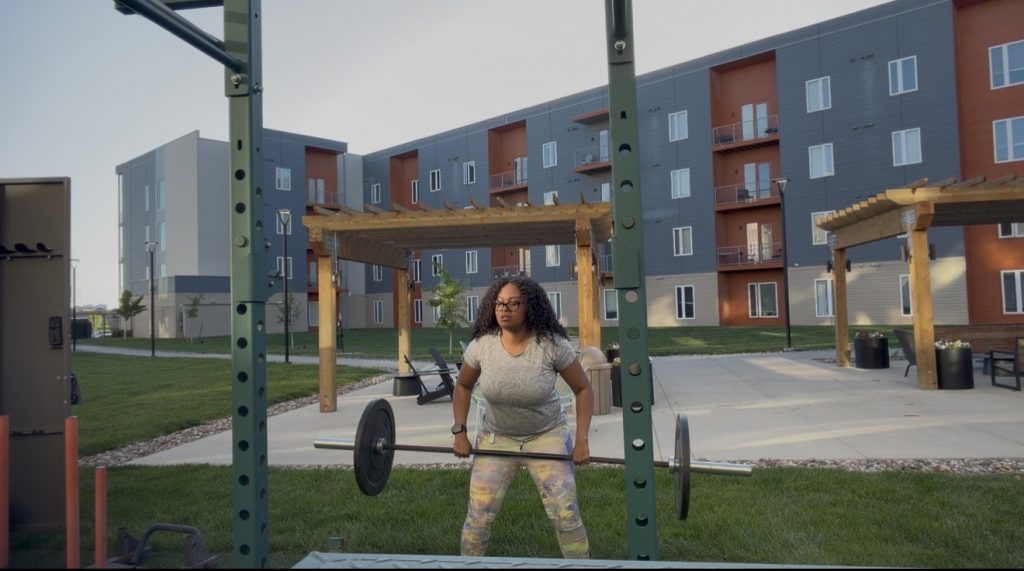
Nutrition is another important part of the equation. I’ve had to work on consuming more protein and increasing my fiber intake, particularly through vegetables. I’ve also learned the importance of carbohydrates when I’m doing endurance activities. Foods such as rice, potatoes, and quinoa can provide energy for running, hiking, climbing, and longer training sessions.
Over the years, I’ve experimented with different ways of eating, including veganism, vegetarianism, and a flexitarian diet. Through my weight-loss journey and my transition toward more performance-based goals, I’ve found that prioritizing protein has been one of the most effective nutritional changes for me.
My goals are becoming more complex as well.
I want to pursue peaks that aren’t challenging only because of their altitude or mileage, but because they involve more scrambling and technical terrain. I want to advance in rock climbing, learn snow travel, become a stronger backpacker, and complete a thru-hike.
Each of those activities requires something slightly different.
Rock climbing requires strength, technique, balance, flexibility, and body awareness. Backpacking requires the ability to carry weight over long distances and still have enough strength and endurance to keep moving. Running develops another kind of endurance. Scrambling requires balance and confidence moving through uneven and sometimes exposed terrain. Snow travel will introduce another set of skills and physical demands that I’m still preparing to learn.
The more I do, the more I realize that I can’t train only one aspect of fitness and expect it to prepare me for everything I want to accomplish.
Strength matters. Endurance matters. Balance, core strength, flexibility, mobility, nutrition, and recovery matter too.
Sleep has become part of that journey. As someone who has struggled with insomnia, getting enough sleep is still an area I’m working on. I’ve had to learn that recovery isn’t separate from training. It’s part of training.
My body is heavier now than it was during some of my earlier adventures, and regaining weight after losing so much of it has been difficult. I still care about my weight, my measurements, and how my clothes fit. I don’t think those things have to become meaningless for me to develop a healthier and more complete way of measuring progress.
Now there are other questions I can ask too.
Am I stronger? Can I carry more weight? Can I travel farther? Is my balance improving? Can I handle more difficult terrain? What did my last climb expose that I need to work on before the next one?
Fitness for me is becoming less about reaching one number and more about building a body capable of doing the things I want to do.
The scale can tell me how much I weigh. A clothing tag can tell me what size fits.
Neither can tell me how strong I’ve become, how far I can go, or what mountain I might be capable of climbing next.