
Slowly, the campus came into view. A mixture of excitement and fear filled Adrian. His dream had finally come true—he would be attending Yale. Still, nervousness about how he would be received crept into his mind.
He didn’t have many possessions: a laptop, a mini fridge, and a few basic necessities.
He had devoted countless hours to studying, community service, and other painstaking sacrifices to get here. Entering this elite world was a dream come true, but in some ways, it also felt like a nightmare. The thought of contending with generations of old money seemed almost impossible.
His family consisted of him and his mother, who had spent most of his life struggling to make ends meet. Adrian viewed himself as a poor young man searching for a place in an aristocratic world.
It had always been his passion to study law. Although the legal system had failed to punish his father for what he had done and had unfairly targeted his best friend, Adrian refused to let either experience completely distort his perception of it. More than anything, he wanted to make a positive impact on the system himself.
His mother helped him carry his meager possessions to his dorm. As they climbed the staircase, Adrian had the uncomfortable feeling that everyone’s eyes were on him. His mother seemed oblivious to it—or, if she noticed, she managed to conceal it.
As they rounded the corner and headed down the hall, Adrian prepared himself for his first encounter with his roommate.
Numerous possibilities ran through his mind. He only hoped the guy wasn’t overly eccentric or obnoxious.
Adrian had always struggled to connect with people his age. Most of them didn’t share his worldview, which made forming meaningful relationships difficult.
When they approached the room, the door was slightly ajar.
Inside, a nonchalant-looking guy sat at a small rectangular black desk, scrolling through Instagram on his MacBook Pro. The dorm wasn’t spacious, but it seemed manageable. Posters of indie rock bands covered the wall beside his bed.
The guy looked up and smiled.
“Hey, bro. I’m Mario Vitali. You must be Adrian Luz.”
He stood and extended his hand.
“Nice to meet you.” Adrian forced a tired smile, still dazed from the long drive.
“So, where are you from?” Mario asked.
“Phoenix.”
Adrian attempted another smile but abandoned it. He needed sleep.
“You must be his mother.” Mario turned toward Catalina and shook her hand. “I thought you were his sister for a second. No joke.”
Mario chuckled.
“Well, I’m flattered, and it’s very nice to meet you, Mario.” Catalina smiled.
“So, Mario, where are you from?” Adrian asked.
“I’m originally from Chicago, but after my parents separated four years ago, my mother sent me to Greenwich to live with my father. It’s not too far from here.”
“I bet that was quite a change,” Adrian said, a little more engaged.
“I still miss Chicago sometimes, but it’s not bad here either.”
“I’m already out of my element.” Adrian sighed.
“You’ll adjust. There’s plenty to do out here. Did you get a chance to tour New Haven yet?”
“I haven’t had much time. We just got here.”
A slight grin spread across Mario’s face.
“There’s still plenty of time.”
Catalina glanced between the two boys.
“Mario, if you don’t mind, I need to have a word with Adrian before I leave.”
“Sure thing. I was about to duck out anyway.” Mario headed toward the door. “It was nice meeting you, Mrs. Luz. Adrian, catch you later.”
He waved before closing the door behind him.
“Bye,” Catalina and Adrian replied in unison.
Catalina turned her attention to her son, nostalgia filling her eyes.
“I remember when you were a baby. I used to cradle you in my arms, and now you’re all grown up and leaving home. Where has the time gone?”
She cupped his face between her hands.
“Mom, stop.”
Adrian pulled away, and Catalina laughed. It never took much to embarrass him.
“It really is amazing how fast time goes.”
“I guess.” He rolled his eyes.
Her expression softened.
“Before I leave, I want you to know that if you ever need anything, you can call me. I’m going to miss you so much, and I wish you the best in all the years to come. And I expect you to come visit me whenever you can.”
“I will.”
“With all that said…” She reached into her beige tote bag. “I have something for you.”
Catalina pulled out a medium-sized rectangular box.
“I want you to open it after I leave.”
Adrian placed the box on his bed before embracing his mother. Catalina fought back tears.
“I’m going to miss you too. Don’t worry. I’ll stay in touch.”
He held her tighter.
“I won’t let you down,” he whispered.
He felt her tense in his arms.
“There isn’t a day that could go by where you could ever disappoint me.”
Catalina gripped his shoulders and looked at him.
Adrian lowered his gaze toward the floor and shook his head.
Deep down, he knew he already had.
“I love you,” he said.
“I love you too.”
They finally pulled apart.
“Goodbye, Adrian.”
“Bye, Mom.”
Catalina stepped into the hallway and closed the door behind her.
An emptiness settled over him almost immediately.
For years, he had talked about escaping Arizona and moving to the Northeast so often that his best friend used to tease him about it.
Now that he was finally here, the room suddenly seemed much quieter than he had imagined.
His attention shifted toward the black box sitting on his bed.
Before Mario returned, he decided he might as well open it.
The box wasn’t particularly light or heavy, which only made him more curious. He shook it once, trying to guess what was inside.
After digging through a mass of tissue paper, his hand finally reached the object beneath it.
He should have known.
A King James Bible.
Oh, great. Another one of Mom’s attempts to convert me.
Still, because he loved her, he wouldn’t throw it away.
As he started to close the box, he noticed a piece of paper sticking out from underneath the Bible.
He lifted it and unfolded the note.
Dear Adrian,
My one and only son, I love you so very much. I am deeply sorry for the lack of childhood you experienced because you were forced to grow up so fast.
I feel like I never truly told you how proud of you I have always been. You overcame obstacles no one should ever have to face. I pray with every passing day that you excel in everything you do.
Love,
Mom
Adrian stared at the note for a moment before noticing something underneath it.
Money.
Instant guilt washed over him.
She shouldn’t have given him anything extra. He already had a full scholarship, and he knew she needed the money more than he did.
The door suddenly swung open.
Adrian flinched.
“Hey, Adrian, what’s up?”
Mario entered carrying two large paper bags of Chinese takeout.
“I figured you’d be hungry after the drive, so I grabbed dinner for both of us.”
“Thanks.”
Adrian tried to sound more grateful than he felt capable of sounding.
Mario dropped onto his side of the room and immediately opened one of the containers.
“So, what are you majoring in?” he asked between bites.
Adrian hesitated.
“Law.”
“Oh, great. I’ll be sharing a room with a future attorney.”
Mario chuckled.
When Adrian didn’t laugh, Mario stopped.
“I’m joking. It’s a good field. My family has been in law for generations, actually. I decided to break the cycle and major in marketing. My father wasn’t happy about it at first, but eventually he agreed to support me.”
Oh, great. Another one of the good old boys.
Adrian glanced around Mario’s side of the room.
He couldn’t help wondering how someone so casual could come from generations of wealth and professional prestige.
“Do you have friends who go here?” Adrian asked, hoping he didn’t sound as anxious as he felt.
“Most of my friends are in a fraternity. My father banned me from joining this year because of my behavior at boarding school, but that won’t stop me from going to their parties.”
Mario ran his fingers through his light brown hair.
“That reminds me. You’ve got to come to some of them.”
Adrian raised an eyebrow.
“One of the houses is throwing a party tomorrow night. We should go. You can start acquainting yourself with some of your…”
Mario paused and gestured knowingly.
“…peers.”
Adrian understood immediately that the peers Mario had in mind were girls.
Mario nudged him.
For the first time since arriving at Yale, Adrian genuinely laughed.
I used to think fan fiction was reserved only for fans of a certain work. But as an author, I’ve found that even with my own stories, when I hit writer’s block or lose motivation, it can be fun to explore alternate timelines and what-ifs.
New characters and even ideas for full-length novels have sprung from writing fan fiction of my own work and exploring alternate realities.
It gives me the freedom to test ideas, relationships, and scenarios I might never publish or let see the light of day. There’s no pressure for everything to fit perfectly into canon.
Ironically, some of those experiments have helped me strengthen scenes that do make it into canon.
Sometimes stepping outside the story is what helps me find my way back into it.
If you only knew what I see when I look at you.
Not just a face,
but lifetimes of memories.
Moments wiped clean from your mind.
Each time you get close enough to remember
what we were
and who you are to me,
everything switches
before we ever get to end the cycle.
Our eternal sunshine.
It feels like I’m going through a personal renaissance with art.
Once I started writing again, I found myself returning not only to fiction and screenwriting, but also to poetry and songwriting. I used to write songs out of boredom in high school and throughout my twenties, and now I’m exploring it again—and, even scarier, actually singing what I write.
I’m not the best singer. It isn’t necessarily my strongest natural talent, and I could probably benefit from a vocal coach. But I enjoy karaoke.
There’s something freeing about singing and dancing even when you’re not particularly good at either. Stage fright is real, but so is the joy of doing something simply because you enjoy it.
When I was younger, I used to come home after school and karaoke whenever no one else was around to hear me. Now I’ve started practicing again, hoping the neighbors don’t hear some of my rougher attempts.
It’s humbling, but that’s part of what makes it enjoyable.
Writing music has been interesting for another reason. Like screenwriting, novel writing, think pieces, or technical writing, songwriting has its own rules and rhythms. The words have to do something different.
One of the best ways I’ve found to test a song is simply to sing it.
It reminds me of reading a novel aloud while editing. Suddenly you hear where something drags, where the rhythm breaks, or where a line that looked perfectly fine on the page becomes awkward once spoken.
Songs work the same way.
When I was younger, most of what I wrote revolved around teenage angst, crushes, unrequited love, and all the emotions that came with them.
Now I’m challenging myself differently. Sometimes I’ll listen to a beat or instrumental and see what story it brings out of me. Other times I’ll pull from characters, situations, or ideas I’ve already written about and try to tell them through a song.
Then comes another challenge: singing it without trying to sound like someone else.
I’m learning to listen for my own natural voice while working on things like enunciation, vocal strength, rhythm, and confidence.
Right now, it’s mostly a creative exercise—something I do because I enjoy it and because it pushes me outside the kinds of writing I already know.
But who knows what might come from it someday?
VERTICAL
Chapter 1
The Summit
Breathing the crisp mountain air above fourteen thousand feet felt like it stripped my ribs bare, shocking life back into muscles dulled by hours of climbing. I had pushed up from camp through the early morning dark, fighting high winds and near-whiteout conditions, front-pointing steep snow with an ice axe in one hand and a hiking pole in the other. Now, standing on the summit of Mount Shasta, exhaustion gave way to something else entirely.
Mount Shasta felt unlike any peak I had ever climbed, her presence rising from the volcanic spine beneath my boots. The Cascades stretched endlessly below, ridgelines stacked and fading into the distance. I set down my axe and pole and sat cross-legged in the snow, letting the sun warm my skin, already exposed too long at altitude.
Then, on the far horizon, the light changed. A violent flash bloomed into a towering plume, rising fast, spreading outward, too symmetrical, too deliberate. Colors churned inside the cloud as it climbed.
Was I delirious?
It couldn’t be what it looked like. Scenes like that belonged to textbooks. Hiroshima. Nagasaki. Not here. Not on American soil.
How far away was it?
There was only dead silence, broken by the wind tearing across the summit. Then came a low, distant rumble that vibrated through the mountain and into my chest. It settled the question instantly. I could not stay here.
I needed to move, and fast.
If I descended toward civilization, who knew what I would find waiting below. The range, however, stretched on for hundreds of miles. I knew exactly how little food and fuel I carried. I didn’t know how long my body could endure the altitude, but staying high and traversing the mountain felt like the only option that made sense.
I could not stay on the summit.
Whatever had been hit was somewhere below. Roads meant towns. Towns meant people, and people might mean targets. For now, the mountains felt safer.
Mountaineering was still new to me. I had climbed several peaks, most far less technical than Shasta. Mount Hood had been my first guided climb. I had chosen Shasta because it was the anniversary of my brother’s death. This climb was supposed to be for him.
Turning my back to the exposure was the part of downclimbing I resented most. Every instinct screamed against it. But I needed to drop lower along the ridgeline, to breathe easier, to follow the spine of the mountain away from whatever was unfolding beyond the horizon.
One step at a time, always maintaining three points of contact. The axe stayed in my lead hand, while my free hand pressed into the slope for balance. I placed my boots deliberately, searching for firm rock, careful to avoid loose talus and thin patches of ice. On the steeper rolls of terrain, I turned in and downclimbed facing the mountain. When the angle eased and the footing improved, I turned back outward and continued lower, steadying myself with each step.
The wind turned brutal, surging with flurries that whipped at my shell and tore at my hair. Without my goggles and balaclava, my face would have been raw with windburn in minutes. The gusts howled across the ridge, carrying something feral in their sound, deepening the unease already coiled in my chest.
To think that in my lifetime, of all times, the world would come under siege while I stood on top of it. While I had chased summits and silence, everything beneath me was unraveling into chaos.
I had not planned to stay at altitude for days.
I turned up my radio, cycling through static until a voice finally broke through, thin and distorted.
“Please take cover. We are under attack.”
From all
the self-doubt
to flinching when you hear a shout
The ease of silence
to the fear of violence
The body keeps score
Caught between love
and war
From every encouraging
word
To every word used as a
sword
The body remembers
what you do to it
The way you treat it
The company you keep
around
Every restraint
And impulse
How you fuel
What you consume
How you train
Or recover
How you talk to yourself
Every rumination
And explanation
Every touch or lack there of
The body keeps core
Writing a novel takes time. Writing a good one takes patience and having a successful one almost feels like luck, though it can happen under the right circumstances.
Now I’m finding myself in a new territory: Screenplays.
I haven’t even finished editing my latest two novels, but I grew curious of the what if: What if I started adapting Volatile and Skepticism into screenplays. Both books have been out eight years now.
As I get into fiction writing, editing, I’m also coming from a period where I’ve done more technical writing and basic, mundane emailing that comes with working with clients. Screenplays are another beast.
They’re shorter, more direct and concise, and they come with time constraints. That means getting rid of a lot of internal thoughts, unnecessary descriptions, scenes and sometimes even characters.
I’m learning to think more like a director or actor. It helps that when I was twenty, I took an acting class, and in high school I participated in our school play. Those experiences help me think about a story from the actor’s perspective. I also took a fiction writing course my junior year of college and attended writing workshops at my local community college a year before.
Each art has its own form and subforums.
I come from the land of books, especially contemporary fiction, urban fantasy, and fantasy, so delving into screen adaptations is new territory, but it’s fun. I’m trying not to take it too seriously while I learn.
I plan to pitch the screenplays when I’m finished and confident in them. Maybe they’ll go somewhere. Maybe the process will simply inspire me to more screenplays. Breaking into screenwriting may be twice as hard as getting an agent or traditionally published, maybe even harder than getting a part as an actress, which is something I considered but never pursued.
So, we’ll see.
For now, it’s a new chapter in my writing life, and I’m enjoying being a beginner again.
Meet the believers, doubters, friends, enemies, and ordinary people caught in something they cannot explain.
SPOILER-FREE · CHARACTER GUIDE
Intelligent, ambitious, and fiercely certain of what he believes—or rather, what he doesn’t.
Adrian has built his worldview around reason. An Ivy League education and a future full of possibilities seem to place him firmly in control of his own story. But when increasingly disturbing experiences begin challenging everything he considers rational, skepticism becomes more than an intellectual position.
It becomes something he has to defend.
Visual: Adrian should absolutely lead the page. Young, polished enough to reflect his academic world, but not corporate. I’d give him a slightly guarded expression rather than a smile. He should look like somebody who is accustomed to being the smartest person in the conversation—and is beginning to encounter something intelligence alone cannot solve.
Hadrea Verga enters Adrian’s life like the beginning of an ordinary college romance.
Beautiful, confident, and magnetic, she is the one who crosses the room and asks the reserved Adrian Luz to dance. But Hadrea’s story quickly becomes tangled in Adrian’s deteriorating world—and in the lives of people far beyond him.
Orphaned young and raised by her fortune-telling grandmother, Hadrea comes from a background that sits strangely close to the supernatural questions Adrian is determined to dismiss.
As relationships fracture and loyalties shift, Hadrea becomes part of a much larger question running through Skepticism:
Where Adrian questions, Adelina believes.
Her faith gives her a framework for things Adrian would rather explain away, creating one of the novel’s most important tensions: what happens when two people can witness the same world and interpret it completely differently?
I wouldn’t make her portrait overtly religious. Let her look like a normal young woman whose faith is simply part of who she is. That makes the contrast with Adrian more interesting.
Mario belongs to Adrian’s human world—the friendships, conversations, ambitions, and relationships that existed before anything became strange.
That makes characters like him especially valuable in Skepticism. The supernatural doesn’t arrive in an isolated gothic mansion. It begins invading the lives of young adults who are supposed to be worrying about school, careers, relationships, and their futures.
His portrait can consequently feel warmer and more relaxed than Adrian’s.
Trina is Adelina’s best friend, roommate, and one of the people drawn into Adrian Luz’s increasingly complicated world.
Warm but far from passive, Trina is willing to speak her mind—especially when Adrian’s behavior crosses a line. Her faith connects her closely to Adelina, while her growing relationship with Mario brings the four friends together even as Adrian’s experiences become increasingly difficult to explain.
Adrian’s story isn’t happening in a vacuum.
Catalina helps establish the person Adrian was before the events of the novel began changing him. Family can recognize things in us that friends and acquaintances miss—and sometimes notice a change before we’re willing to acknowledge it ourselves.
For her portrait, I’d deliberately create some subtle visual resemblance between Catalina and Adrian without making them look identical.
Some people enter a story carrying answers.
Others carry questions that make everything worse.
Horacio belongs closer to the novel’s unsettling side. His portrait shouldn’t immediately scream horror character, though. Skepticism works because its paranormal elements emerge from an otherwise ordinary world.
I’d make him serious, slightly difficult to read, and visually distinct from the younger college-age characters.
Jake represents a very different kind of power from anything paranormal.
Wealth, status, confidence, and the assumptions that come with them make him recognizable long before anything supernatural needs to happen. He’s also useful because Skepticism isn’t only interested in demons, possession, or belief. It’s interested in the ugliness ordinary people are perfectly capable of producing themselves.
His portrait should look expensive without becoming a caricature. Clean-cut, attractive, confident, perhaps even charming at first glance. The discomfort should come from knowing him, not looking at him.
Mathew expands the world beyond Adrian’s immediate peer group and gives us another adult presence within the social structure surrounding these characters.
I’d make his portrait considerably more conventional and established than Adrian’s generation. It will visually reinforce that Skepticism spans families and communities rather than functioning solely as a college horror story
Belinda helps populate that deceptively normal world surrounding Adrian.
And that’s something I would emphasize throughout this entire feature: these people should look like they belong in a drama before they look like they belong in a horror novel.
That makes what eventually happens around them much creepier.
Jennifer rounds out the younger ensemble and helps preserve the feeling that these are recognizable young adults living recognizable lives.
Pastor Flores is a man of faith confronted by a young man determined to challenge it.
When Adrian first encounters him, he sees little more than another preacher asking a congregation for money—and openly accuses him of being a fraud. Pastor Flores responds not with retaliation, but by revealing that the church’s offering is being used to help underprivileged families.
Meet the survivors, believers, skeptics, prophets, and ancient powers caught amid the fire.
THROUGH THE FIRE · BOOK TWO
SPOILER-FREE
AMID THE FIRE
Three years ago, Maricel disappeared.
Now she lives in Dallas under another name.
She works in a bookstore. She attends community college. She studies scripture. And after years spent rebuilding her life from almost nothing, she has found something she once desperately lacked:
purpose.
But Maricel hasn’t forgotten what happened to her.
She hasn’t forgotten Azazel.
And while the people around her see political unrest, strange events and a world becoming increasingly unstable, Maricel sees something else.
Prophecy.
Volatile was about stepping into a world Maricel didn’t understand.
Embers begins with Maricel understanding enough to be terrified of what may come next.
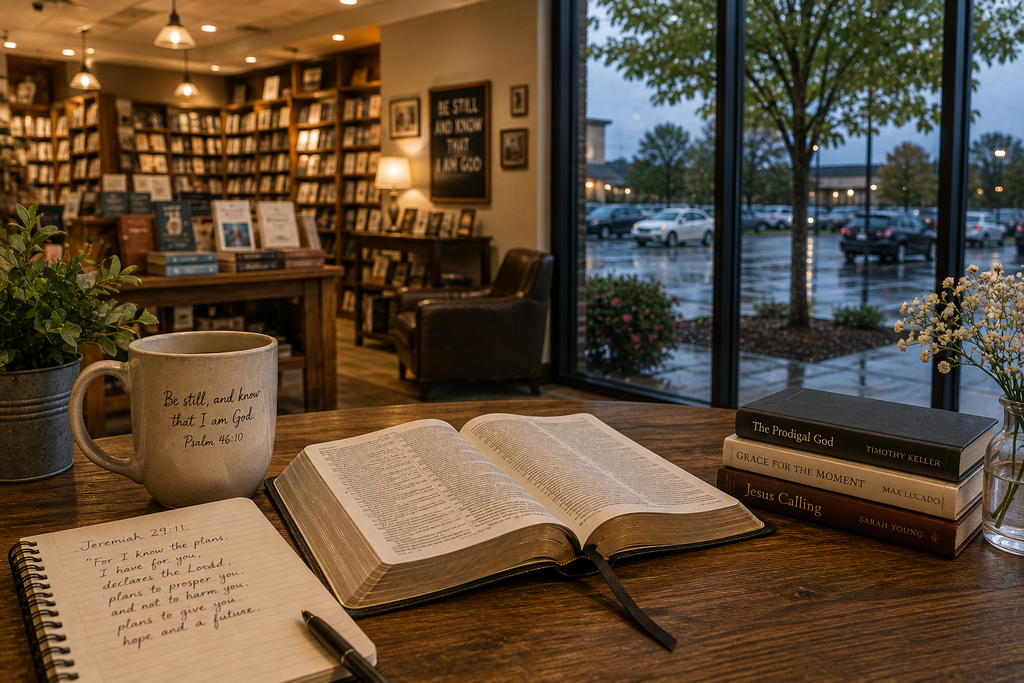
THE CENTER
MARICEL
The woman who escaped one life only to discover the story wasn’t finished with her.
SURVIVOR · SEEKER · PROPHET

The Maricel who begins Embers is not the young actress who once dreamed of meeting an angel.
She has already met one.
And she knows what extraordinary things can cost.
For three years, Maricel has lived publicly as Patricia, trading Hollywood for books, school and a quiet life in Dallas. Her growing faith has given her a new way to understand the things she experienced—and the things she believes are still coming.
Because Maricel doesn’t believe the instability around her is random.
She believes she can see what’s ahead.
The problem is convincing anyone else.
Can you become someone new when the world keeps calling you back to who you were?
THE ONE WHO LISTENS
MASON
The one who takes her seriously when almost no one else will.
BOOKSTORE OWNER · BOSS · BIBLE STUDY LEADER
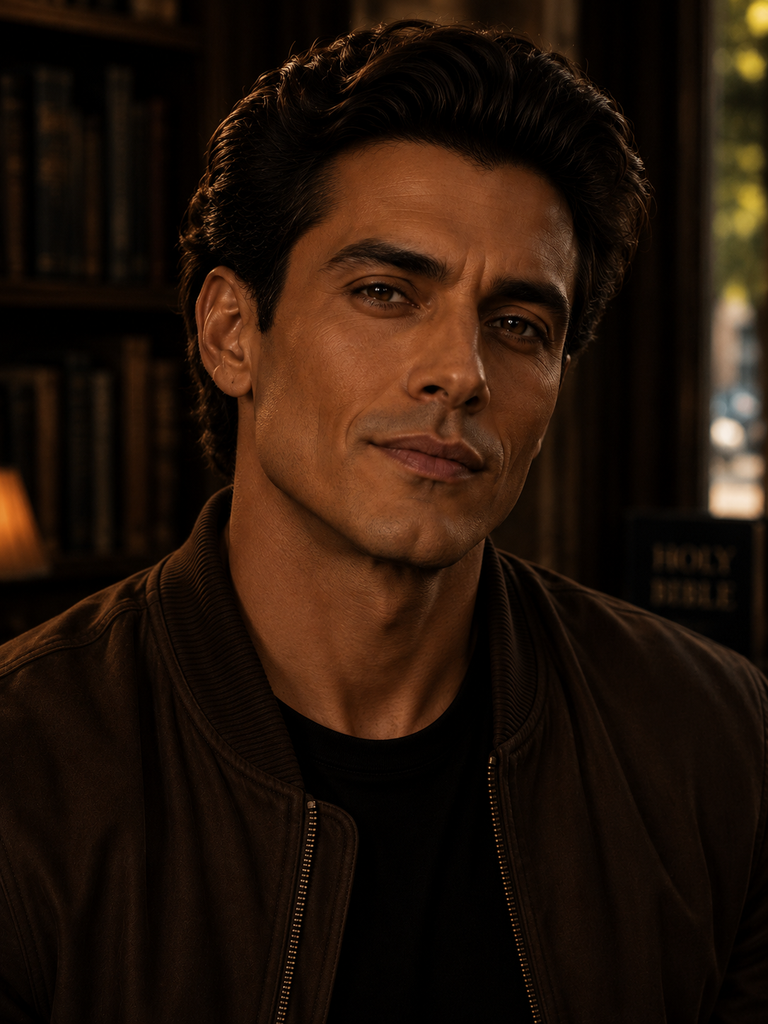
Dr. Mason Richmond is Maricel’s new boss.
Even-tempered, intelligent and interested in many of the same theological questions that consume her, Mason offers Maricel something increasingly rare:
He listens.
When others find her ideas strange, Mason encourages her to speak. When Maricel questions whether she has any authority to interpret what she’s seeing, Mason sees potential in her.
Their shared interest in prophecy draws them closer.
And being believed can make someone extraordinarily important to a person who has spent years being doubted.
What happens when someone finally tells you the things everyone else doubts might be real?
THE ONES WHO REMEMBERS
LESLIE
The best friend who has already seen Maricel through one impossible life.
BEST FRIEND · CONFIDANTE · LOYALIST
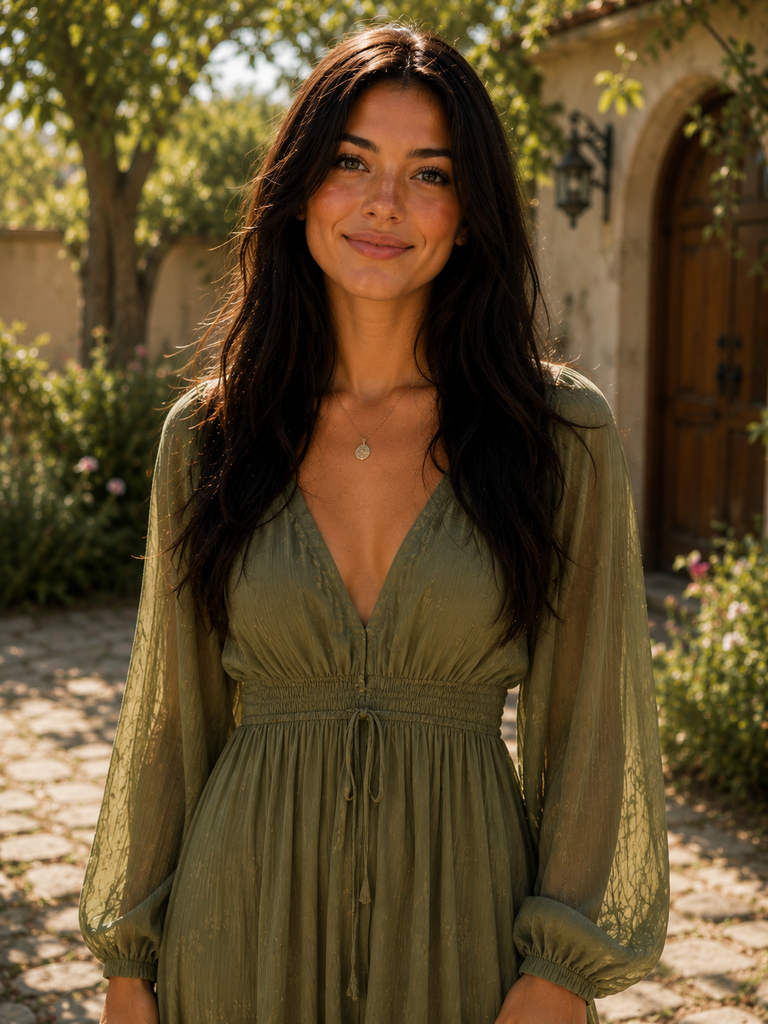
Leslie knew Maricel before Dallas.
Before Patricia.
Before prophecy became something Maricel studied instead of something that happened to her.
As Maricel’s best friend, Leslie doesn’t need to understand every supernatural force surrounding her to recognize when Maricel needs someone beside her.
She listens when Maricel is afraid.
She tells her things she may not want to hear.
And when Maricel’s life becomes impossible again, Leslie does what she has always done:
she stays.
That loyalty is particularly explicit when Erich volunteers them for a dangerous mission with the simple answer, “Leslie and I as always.”
Some friendships survive because neither person ever learns how to leave.
ERICH
The skeptic who learned that disbelief doesn’t make danger disappear.
SKEPTIC · WITNESS · FRIEND
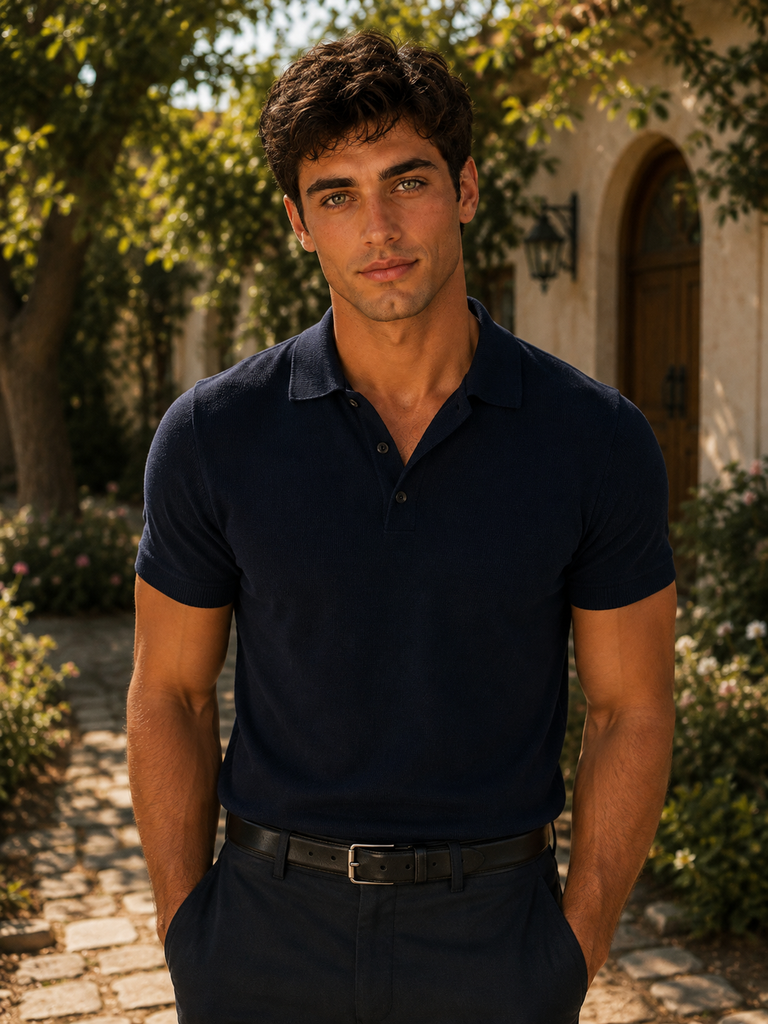
Erich has never needed Maricel’s supernatural explanations to recognize danger.
He remembers Hollywood.
He remembers Claudius.
And he remembers watching someone he cared about become entangled with something he never trusted.
Years later, Maricel has found faith and a new explanation for the world around her.
Erich remains willing to ask the questions other people don’t.
But skepticism has never meant abandonment.
When Maricel walks toward danger again, Erich is still there.
You don’t have to share someone’s beliefs to believe what happened to them.
THE FRIENDS WHO JOINED THE JOURNEY
CAROLINE
The friend willing to listen before she understands.
BELIEVER · FRIEND · HEART

Caroline enters Maricel’s life knowing her as Patricia.
What she eventually receives is a much more complicated truth.
Warm, devout and open-minded, Caroline doesn’t always understand Maricel’s interpretation of the world.
She doesn’t have to.
Where others respond to uncertainty by becoming rigid, Caroline leaves room for compassion.
And as Maricel’s world becomes increasingly divided between believers and skeptics, prophets and impostors, Caroline offers something deceptively simple:
someone willing to stay beside her while still asking questions.
Sometimes believing someone begins with listening.
KEVIN
The husband who discovers that his wife’s new friendship comes with a much larger world.
HUSBAND · FRIEND · COMPANION
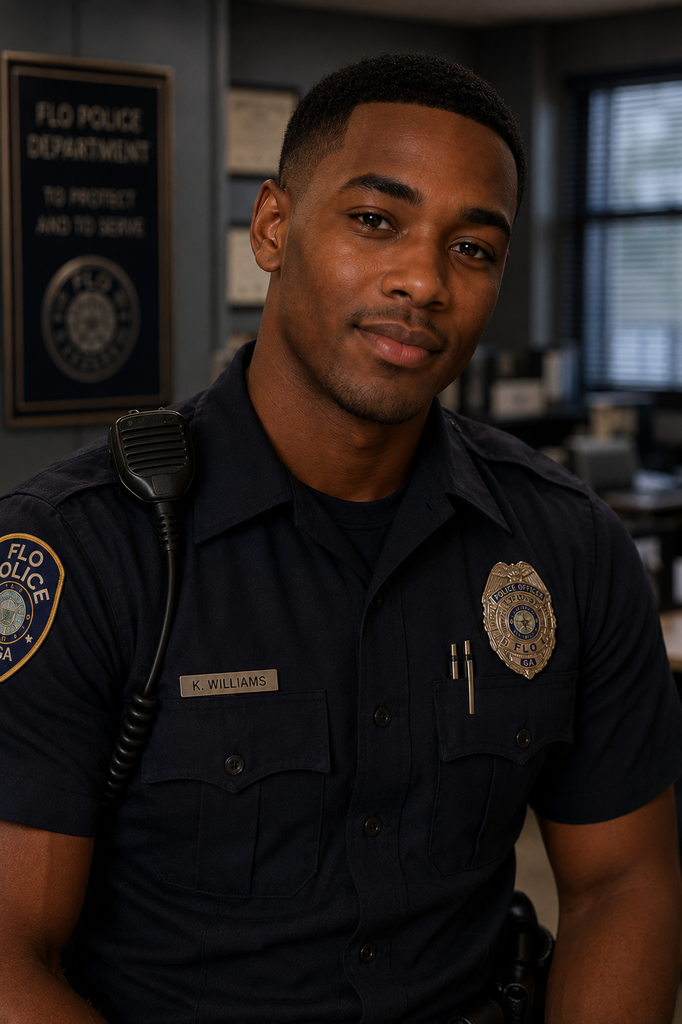
Kevin enters Maricel’s world through Caroline.
But as that world becomes stranger—and considerably more dangerous—he doesn’t remain merely his wife’s plus-one.
He becomes part of the group itself.
Practical, social and willing to follow his friends into situations none of them could have anticipated, Kevin helps make Embers feel less like the story of isolated prophets and supernatural beings and more like something happening to ordinary people alongside them.
When the group faces one of its dangerous missions, Kevin’s answer is telling:
if Caroline is going, so is he.
Sometimes loyalty means entering a story you never expected to be yours.
WARREN
The friend who never quite stops asking whether any of this is a good idea.
FRIEND · REALIST · COMPANION
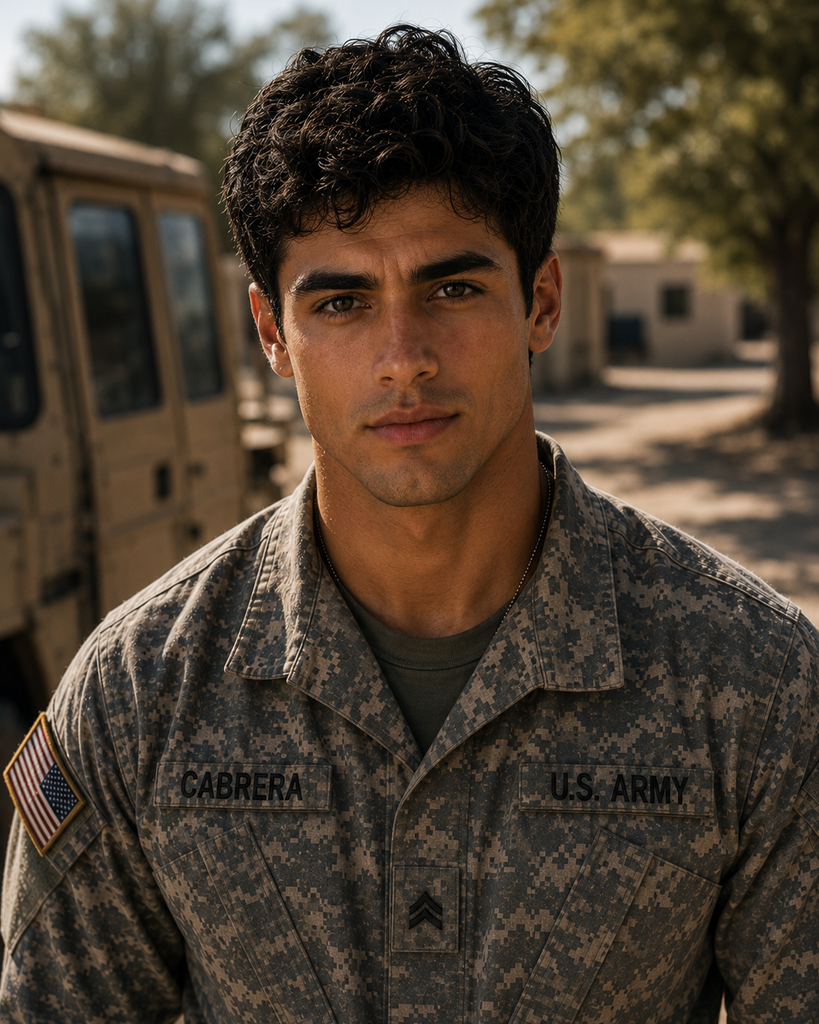
Warren brings something Maricel’s increasingly prophetic world desperately needs:
another person willing to question it.
He can joke when everyone else is terrified, challenge plans that sound suicidal and still climb into the car when the group decides to go anyway.
That combination makes Warren part skeptic, part comic relief and part reminder that not everyone traveling beside Maricel has to experience events with the same solemn certainty.
When an extraordinarily dangerous mission is proposed, his eventual answer is simple:
“Count me in.”
You can think the plan is insane and still refuse to let your friends face it alone.
POLITICIAN · REFORMER · CONTENDER
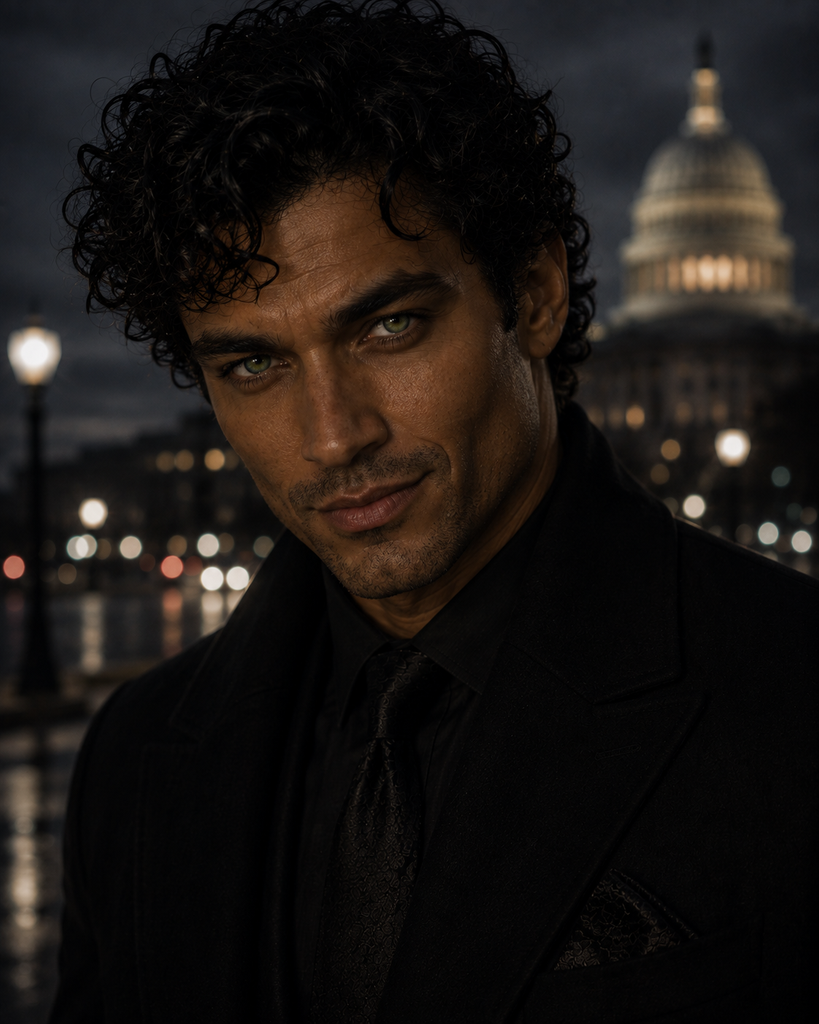
Jalen shouldn’t be introduced through everything we know about him from later material or the AU. He should be Embers Jalen only.
His section should essentially establish:
Jalen is a rising political figure entering a world already destabilized by fear, religious upheaval and questions about what comes next.
To most people, he is a politician.
To Maricel, politics can no longer be separated so easily from prophecy.
And as Jalen’s influence grows, his place in the changing world becomes increasingly difficult for her to ignore.
When you’ve spent years studying the end of the world, how do you look at someone promising to build a new one?
THE OTHER PROPHET
LEO
The stranger who sees what Maricel sees.
OUTSIDER · PROPHET · SURVIVOR
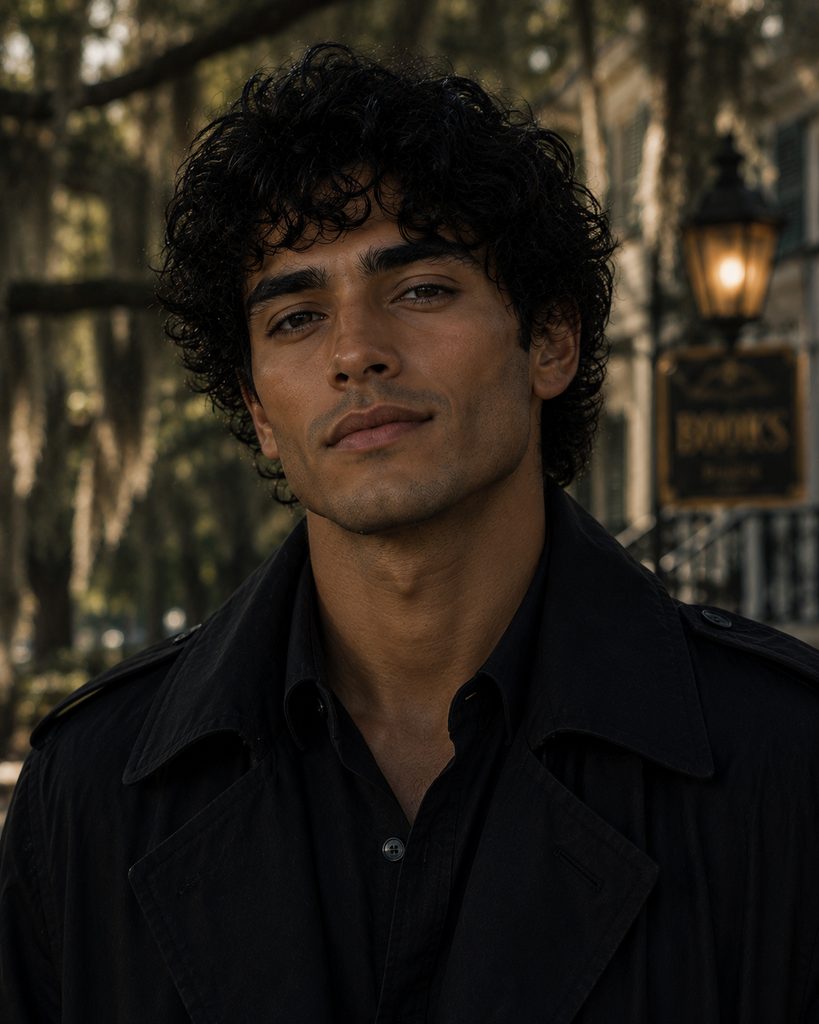
For years, Maricel has carried knowledge that sounds impossible when spoken aloud.
Then she meets Leo.
Unkempt, unpredictable and operating by a moral code very different from the people Maricel has surrounded herself with, Leo isn’t an obvious answer to anything.
But he understands things he shouldn’t.
He sees patterns Maricel recognizes.
And most unsettling of all, he possesses the same strange gift Maricel has been struggling to understand in herself.
For someone who has spent years wondering whether anyone could truly understand what she sees, Leo represents something Maricel didn’t expect to find:
recognition.
But recognition and trust aren’t necessarily the same thing.
What happens when the person everyone tells you not to trust is the first person who truly understands what you see?
THE LIFE HE LEFT BEHIND
CICELY
The woman everyone once thought Leo would marry.
RIVAL · TRADITION · LOYALIST
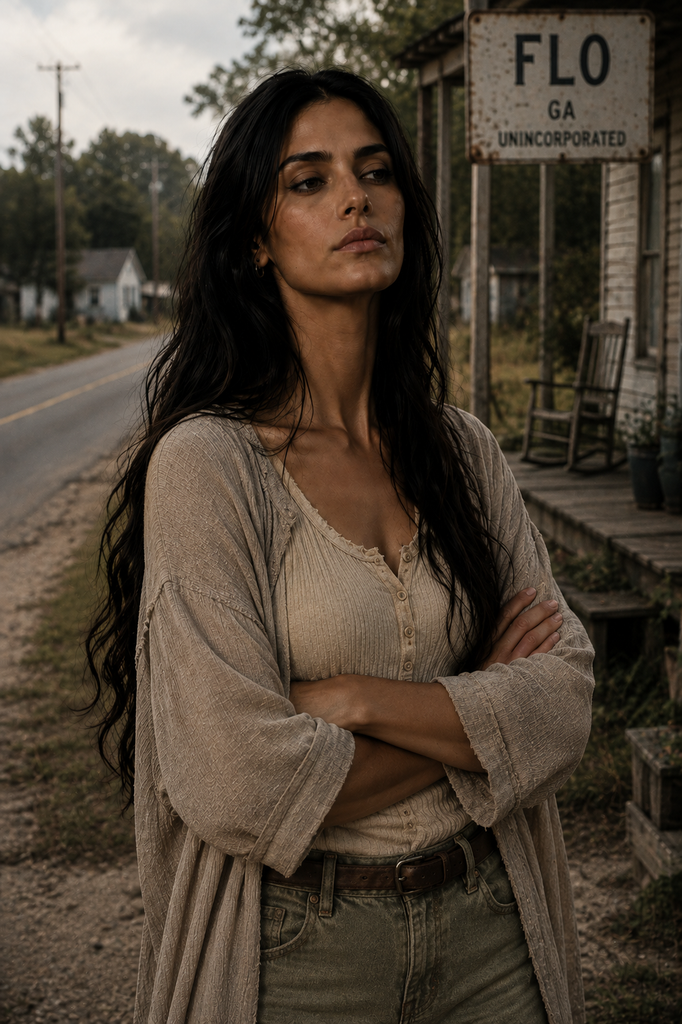
Cicely knew Leo long before Maricel did.
In Flo, their future once seemed almost predetermined. Their families expected it. Cicely believed in it. And even after Leo walked away from the life chosen for him, the possibility of his return never entirely disappeared.
Then he comes home with Maricel.
To Cicely, Maricel isn’t simply another woman competing for Leo’s affection.
She’s an outsider.
She carries beliefs Cicely distrusts, a history tied to people Cicely has every reason to hate, and a connection to Leo that threatens the future Flo once imagined for him.
The manuscript makes that pressure explicit: Leo’s father tells him that his mother’s dying wish was for him to return, marry Cicely and have a normal family in Flo.
So Cicely represents more than romantic rivalry.
She represents the life Leo was supposed to choose.
What happens when someone else’s freedom means losing the future you thought was yours?
That question makes her much more dimensional than simply labeling her “Leo’s jealous ex.”
THE THRESHOLD
Now the entire page changes.
Everything above has been contemporary:
Dallas. Books. Friends. Faith. Flo. Human relationships.
MARICEL LEFT THEIR WORLD.
THEIR WORLD NEVER LEFT HERS.
THE ANGEL SHE ESCAPED
AZAZEL
The angel Maricel once knew as Claudius.
WATCHER · KING · FORMER FIANCÉ

For three years, Maricel has tried to construct a life beyond Azazel.
But Azazel was never simply someone she loved.
He is an ancient angel—a Watcher whose history stretches far beyond Maricel’s own—and Maricel now understands his world far better than she did when she first met him as Claudius.
Whatever Maricel believes she escaped, Azazel hasn’t forgotten her.
Nor has he abandoned his vision for what she could become beside him.
THE QUEEN
TESS
The woman who steps willingly toward the world Maricel ran from.
BELIEVER · QUEEN · COUNTERPOINT

Maricel has spent years trying to escape a world of ancient powers, predetermined roles and beings who seem certain they know what she should become.
Tess sees that world differently.
Where Maricel has learned to question extraordinary promises, Tess is willing to consider what might be waiting on the other side of them.
That makes her a counterpoint to Maricel:
two women confronted with the possibility of becoming something larger than the lives they once knew—and responding very differently.
What looks like a cage to one person can look like a kingdom to another.
ONE FACE IS MISSING.
BELIAL
There is another angel woven through Embers.
Ancient. Calculating. Mocha-eyed.
A name Maricel has encountered before.
But showing you which face belongs to him would answer a question the novel should answer first.
MARICEL · MASON · LESLIE · ERICH · CAROLINE · KEVIN · WARREN · JALEN · LEO · CICELY · AZAZEL · TESS
Some believe her.
Some doubt her.
Some remember who she was.
Some understand things no one else can.
Some represent the lives that might have been.
Some have already decided what Maricel should become.
And somewhere between prophecy, faith, friendship, love and power, Maricel is trying to answer something for herself:
FROM THE AUTHOR
What interested me in writing Embers was what happens when escape doesn’t mean the story is over.
Maricel begins the novel believing she has already survived the most dangerous part of her life. She has changed her name, rebuilt herself and found a faith that gives meaning to things she once couldn’t understand.
But Embers isn’t the aftermath.
Maricel is still amid the fire.
The difference is that now she knows she’s burning.
As her old world collides with the new one, nearly everyone around her seems to have an idea of who she is supposed to become.
Some see a prophet.
Some see someone they need to protect.
Some see someone they can love.
Some see someone who belongs to them.
And some see a role for her in a future she isn’t sure she wants.
Others see something much more dangerous.
Where some see prophecy, others see obsession. They see a woman losing her grip on reality, drawing the people around her deeper into beliefs that sound increasingly impossible. To some, the little community forming around her doesn’t look like fellowship.
It looks like a cult.
And there are others who don’t merely doubt Maricel.
They want to stop her.
At the center of all of it is a question Maricel is finally beginning to ask:
If everyone believes your life has a purpose, how do you know which part of that purpose you actually chose?
THROUGH THE FIRE · BOOK ONE
Meet the dreamers, believers, skeptics, survivors, and ancient beings at the beginning of the Through the Fire saga.
SPOILER-FREE · 10 MIN READ

Before the Fire
Maricel has come to Los Angeles chasing a life much larger than the one she left behind.
A twenty-two-year-old actress with a fascination for mythology and the unexplained, she has spent years communicating through visions with a being she knows as Claudius—her guardian angel.
Then Claudius tells her it’s finally time to meet.
What begins as the fulfillment of something Maricel has dreamed about for years gradually opens a door into a world much older, stranger, and more dangerous than the one she thought she understood.
Volatile is a story about love, faith, ambition, identity, and power—and the uneasy space between choosing your own path and understanding who may have helped build it.
THE CENTER
Maricel
The dreamer who wants something more.

22 · ACTRESS · LOS ANGELES
Maricel wants more from life than ordinary existence seems willing to give her.
Reserved but intensely imaginative, she has spent much of her life caught between skepticism and a fascination with things she can’t explain. Acting offers her one escape. Mythology offers another.
Claudius offers something else entirely:
the feeling of being understood.
He knows the part of her that wonders whether the world is stranger than everyone insists it is. More importantly, he seems to understand the part of her that has always believed she was meant for something beyond an ordinary life.
That makes Maricel’s greatest strength—her willingness to leap toward the unknown—one of her greatest vulnerabilities.
CURIOUS · IDEALISTIC · RESTLESS
How do you know a choice belongs entirely to you?
THE MYSTERY
Claudius
The angel who finally stepped out of her dreams.
GUARDIAN · CONFIDANT · SOMETHING MORE
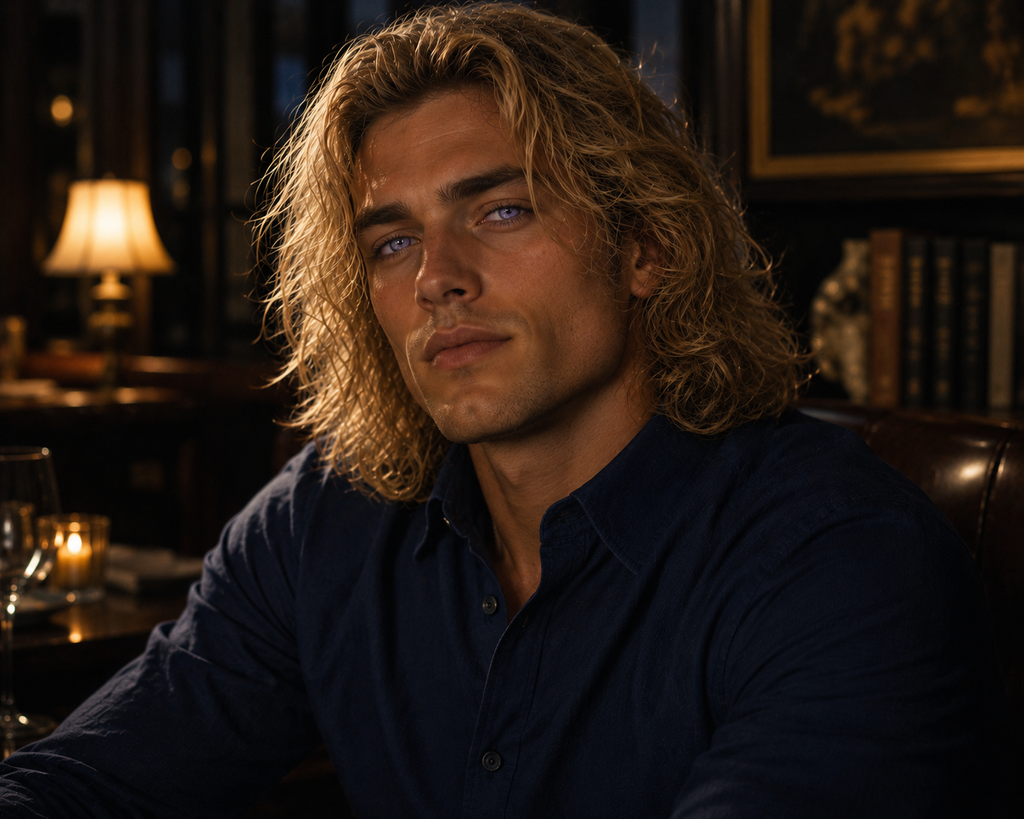
For three years, Maricel has known Claudius through visions.
When they finally meet beneath the Hollywood sign, he seems to be everything she believed he was: charming, brilliant, protective, and almost impossibly capable.
He knows history because he witnessed it. He can take her places other people could only imagine. And he understands parts of Maricel she has never been able to explain to anyone else.
But there are things Claudius doesn’t tell her.
And beneath his humor and affection lies a temper capable of making even Maricel afraid.
CHARISMATIC · MERCURIAL · SECRETIVE
What does trust mean when one person knows the whole story and the other doesn’t?
THE WORLD AROUND HER
Not everyone in Maricel’s life is looking toward the supernatural.
Some are trying to pull her back.
Others are beginning to realize that perhaps she wasn’t imagining as much as they thought.
Leslie
The best friend.
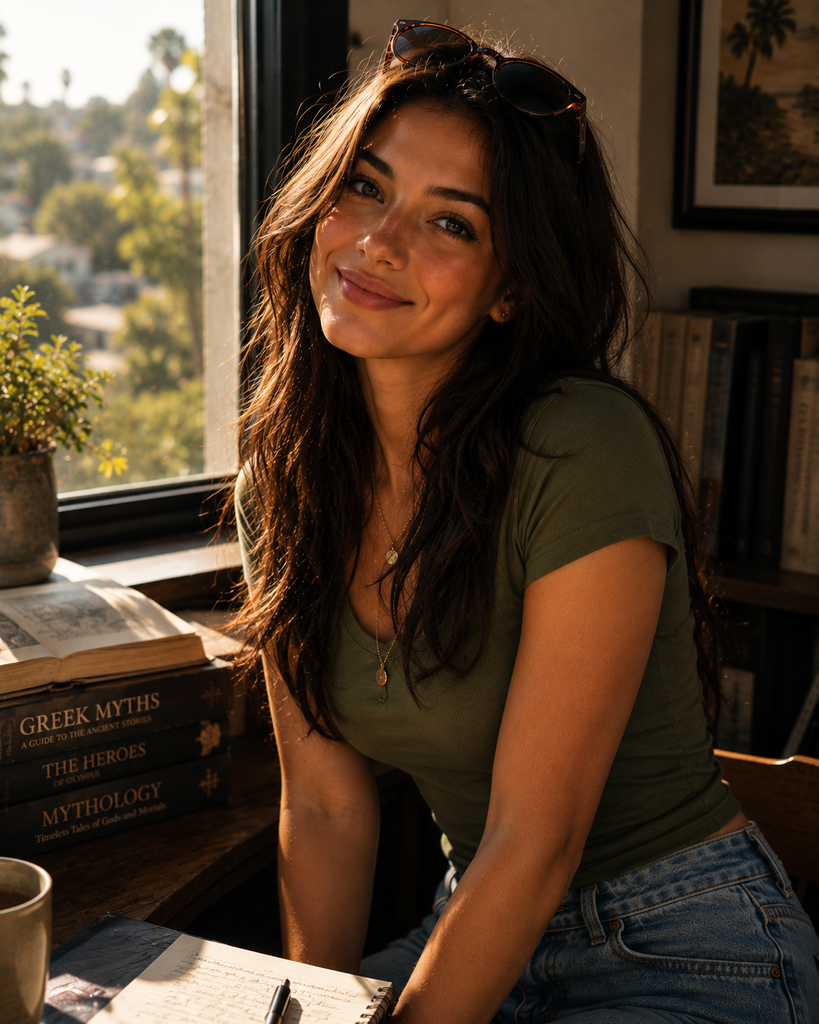
ACTRESS · ROMANTIC · SOCIAL
Leslie brings Maricel back to earth.
Ambitious, outgoing, relationship-oriented, and considerably more social than her introverted best friend, Leslie believes Maricel spends far too much time locked inside her own head.
Their friendship predates the supernatural world consuming Maricel’s life.
That makes Leslie one of Maricel’s remaining connections to normalcy—a life of auditions, relationships, friendship, and ordinary problems that increasingly seems to belong to another world.
WARM · AMBITIOUS · OUTGOING
How long can someone remain part of your old life when you are becoming someone new?
Erich
The skeptic who won’t stop warning her.

SUSPICIOUS · PERSISTENT · PROTECTIVE
Erich doesn’t see Claudius the way Maricel does.
Where she sees a guardian, he recognizes something dangerous.
His increasingly urgent attempts to convince her of that make him look obsessive long before Maricel understands why he is so afraid.
But Erich’s warnings aren’t abstract.
He has a history that makes the supernatural considerably more personal than Maricel initially realizes.
And unlike Maricel, Erich isn’t interested in being enchanted by any of it.
What if the person everyone thinks is paranoid is the only one asking the right questions?
BEYOND THE WORLD SHE KNOWS
The circle widens.
And not everyone Maricel meets belongs to the life she thought she was building.
Logan
THE SURVIVOR
Pragmatic · Hardened · Perceptive
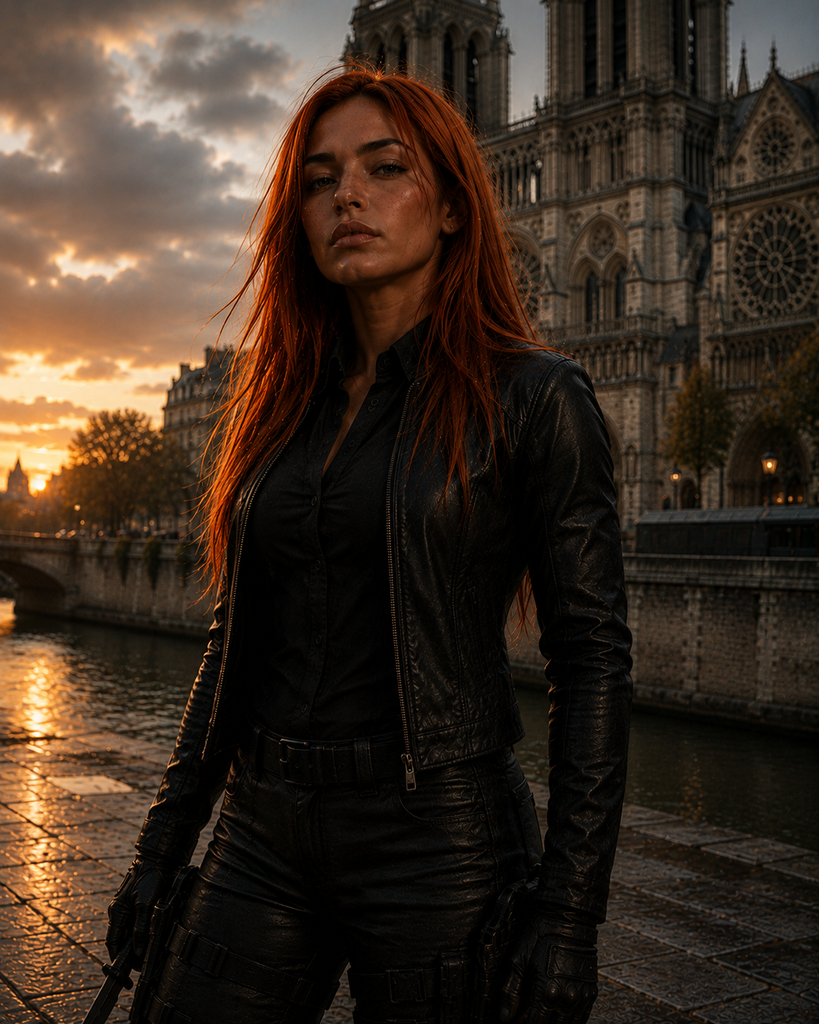
Logan has learned to judge the world according to what it does rather than what it claims to be.
She enters Maricel’s life carrying experiences that make innocence a luxury—and survival something considerably more morally complicated.
Logan knows what it means to live inside a world where violence has rules, loyalty has a price, and sometimes surviving requires becoming someone you never intended to be.
She has little patience for illusions.
Especially other people’s.
Tess
Beautiful · Elusive · Unsettling
THE ENIGMA

Tess is difficult to place.
There is something about her that seems to belong to the world Maricel is only beginning to understand, although exactly where she fits is much harder to determine.
She is poised, mysterious, and more connected to the people surrounding Maricel than first appearances suggest.
Some people enter your life as strangers.
Others feel as though they’ve arrived carrying a history no one has bothered to tell you.
Tess is the latter.
Francis
THE LOYALIST

Loyal · Wounded · Courageous
Francis exists close enough to power to understand it while never possessing the same freedom as those above him.
He knows what obedience costs.
He also knows that loyalty and trust are not necessarily the same thing.
His relationship with Maricel raises quieter questions about dignity, hierarchy, and what remains between two people once the structures around them begin determining who holds power over whom.
How much of yourself can you surrender before loyalty becomes something else?
Ava
THE OBSERVER
Quiet · Guarded · Watchful

Ava is easy to overlook.
That is precisely why readers shouldn’t.
She understands this world from a position very different from Maricel’s and carries a history she isn’t particularly interested in explaining.
Ava has learned the usefulness of silence.
While other people argue, threaten, protect, command, and demand to be heard, Ava watches.
And sometimes the person saying the least understands considerably more than everyone else.
Semjaza
THE WATCHER
Ancient · Authoritative · Calculating

Some of the mythology Maricel has spent her life reading isn’t mythology at all.
Semjaza belongs to that older world—a history of Watchers, rebellion, and consequences stretching far beyond Maricel’s lifetime.
To Maricel, names like his once belonged to ancient texts and stories.
Now those stories are beginning to acquire faces.
And beings like Semjaza haven’t disappeared simply because humanity stopped believing they existed.
What happens when mythology remembers that it was history?
Naamah
THE SHADOW
Ancient · Beautiful · Unknowable

Some names survive for a reason.
Naamah is one of them.
She belongs to stories far older than Maricel, Los Angeles, or the world Maricel believes she understands.
Exactly where those stories end—and where the truth begins—is something Volatile leaves for Maricel to discover.
For now, it is enough to know the name.
Naamah.
Because not every story that becomes a legend is finished.
ONE NAME IS MISSING
Azazel.
If you’ve already read Volatile, you know.
If you haven’t:
Meet Claudius first.
That’s how Maricel knows him.
And this story works best when you know only as much as she does.
NO SPOILERS. KEEP READING. →
FROM THE AUTHOR
Everyone is looking at the same story differently.
One of the things that interests me most about Volatile is that its characters can occupy the same world, encounter the same people, and experience many of the same events while reaching completely different conclusions about what they mean.
Maricel can look at Claudius and see love.
Erich can look at him and see danger.
Someone else can look at power and see security.
Another can experience that same system and see imprisonment.
One person sees loyalty where another sees submission. Faith can look like courage from one perspective and blindness from another.
And none of those interpretations exists completely independently of the person doing the looking.
Maricel begins Volatile believing that the greatest question in her life is whether the extraordinary things she has experienced are real.
But there is a harder question underneath that one:
If they are real, what does that actually mean?
Believing someone exists doesn’t mean you understand them.
Being loved doesn’t necessarily mean you understand why you were chosen.
And receiving everything you’ve dreamed about doesn’t guarantee that the person offering it wants the same things for you that you want for yourself.
That’s the tension at the heart of Volatile.
Maricel desperately wants to understand the extraordinary world opening around her.
But understanding that world will eventually require something much harder than deciding what she believes.
It will require deciding who she wants to be within it.
If someone gives you everything
you thought you wanted,
when do you start asking
why they wanted you to have it?
TEN CHARACTERS. TEN LENSES.
One story that looks very different depending on who is telling it.
Enter Volatile. →